
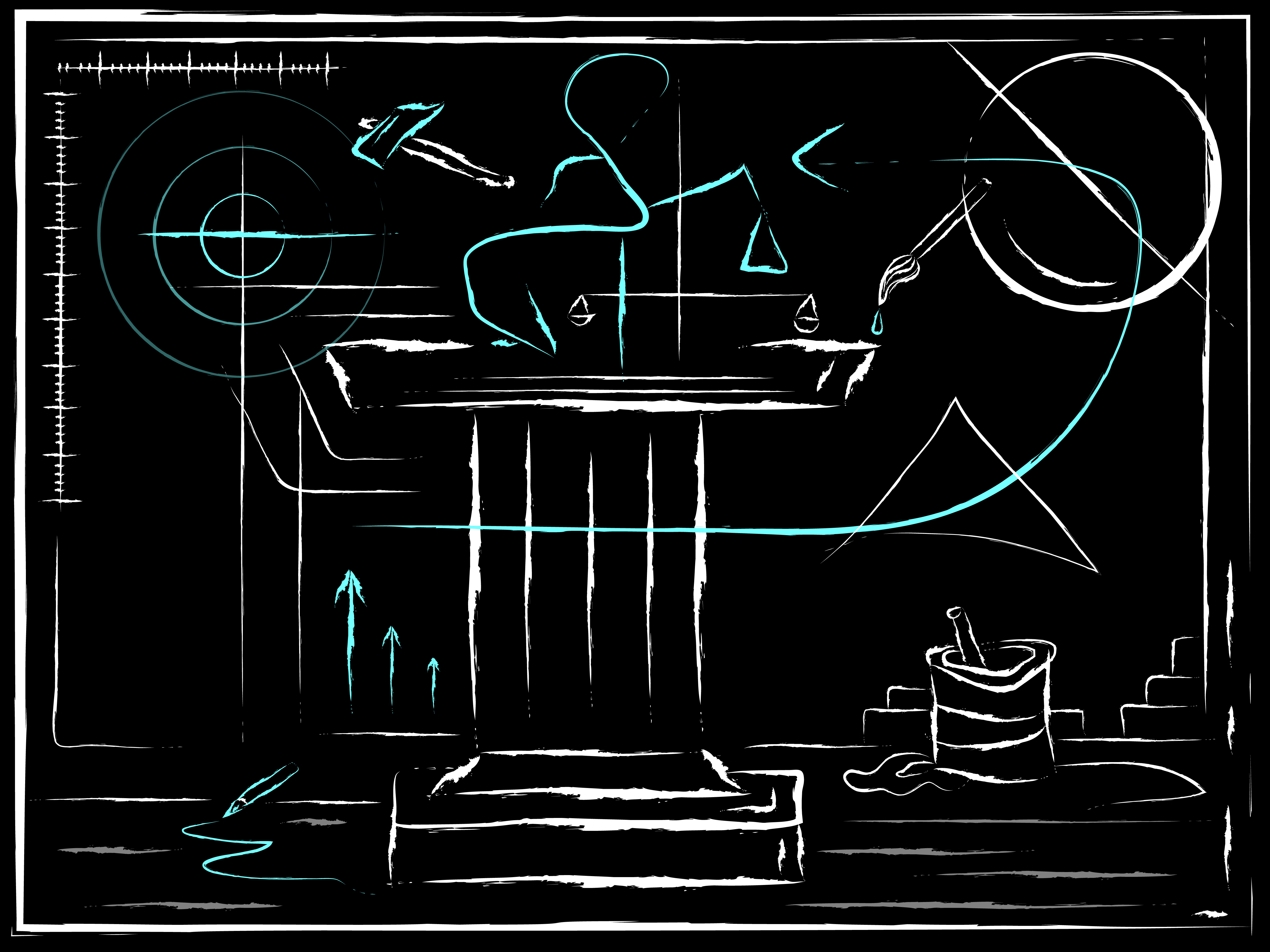
All Works of Art Stem From the Art of Work
Introduction
When we view a work of art, rarely if ever do we think about the hundreds, or possibly thousands of hours that have gone into it. The manhours required to create something like a cathedral may throw shade on a single painting, or when we consider the number of people required to make a blockbuster and compare it to a song by a single indie artist, recording and mastering in their bedroom, it might seem like some works of art take less work. While they may require less time or fewer people, all of these works of art undoubtedly come from the art of work.
Behind every single artwork is labour. There is no getting around it. AI companies may try to sell us the idea that paintings can be generated in seconds without much effort, or that we can replace actors needing countless hours of practice and reading with digital people. But are these works of art?
Behind every cathedral and movie is a director or architect who has seen the work of art in their mind’s eye. In their mental palaces, they have extruded and, through great intensive effort, brought it into physical reality. Many great works of art and ideas have undoubtedly died in this mental realm, but what we are here to witness are all works of art that have stemmed from the art of work, because to be brought to life, just like a human, labour is required. A word used both for the worker and for the childbearing mother.
There are many works of art and ideas that never come to fruition; we have talked about the death of projects and their importance. It feeds other projects, but all of these projects need physical tending just like a garden. A forest grows unkempt and without much attention, but a garden, however, needs to be toiled at regularly to be maintained and to enjoy its bounties; arduous work is required.
Work is what brings ideas to life, and without it, we would have no works of art. There is an art to work as well, and this essay will explore some aspects of this art, and it’s importance to manifesting art, and what happens if you don’t put in the work.
The motto of this essay is: Just do it.
Do or Do Not - There is No Try
People always tell me “oh, I could never paint” or “I can’t draw”, these beliefs are explanations of how we view ourselves - “I am a person who does X but not Y”, and form a very important aspect of our identity. Objectively, they’re not true in most cases - we can do almost anything, of course, that doesn’t mean it would be perfect or even good in our first attempts, but nobody starts out great, and being really good at something and being able to do something are two very different things. People often say “I tried doing X, but couldn’t do it”; what they mean is often that they tried and it didn’t live up to the expectations they set on themselves. In the words of Yoda from the 1980’s classic, Star Wars: Episode V.
“Do or do not - there is no try.”
Removing those self-imposed expectations, art is quite a simple question: have you done it or have you not? People are often quick to criticise, particularly abstract artists like Pollock, saying things like “I could do that” or “A 3-year-old could do that”, and it’s not really a question of who can and can’t do something, but a question of who is doing it.
Who does what might be a leftover from our older societies - like medieval europe where the state of man was divided into three using a Latin proverb: “Tu ora, tu protege, tu labora” - “You pray, you protect, you work”. Figuratively, this was a description of medieval societal roles, and believed to have been framed after God’s own holy trinity - dividing men into clerics, warriors and labourers. We are still quite rigid in our class thinking, you have to be smart enough to be a doctor, and you have to be artistic enough to be an artist. But is man not a tabula rasa - an empty slate?
In our modern world, most people have access to education they couldn’t have previously received - but it has one requirement for most people: work. When people say “I couldn’t be a doctor”, what they’re saying is, “I don’t want to make myself do the work required to get that degree” - in most cases, it’s not a case of being too stupid to understand. You might not have the right tools required for it, but you can get those tools if you wish. Studying takes technique, hard work and a lot of sacrifices, as do most things. Today, most of us aren’t limited to the class we’re born in, but we decide what work we will and won’t do. Most of these limitations are imposed by us on ourselves.
Especially in the case of art, which is something that can be done by anyone, at any time. There’s not even a requirement that you should have a functioning mind or even a functioning body. Art is nearly limitless, both in execution and reception. Both good and “bad” art thrives, and it’s really more about the journey than the destination. What makes an artist, really, is a matter of “do you create art or not?” The requirements for being a good or bad artist might be different, but such judgment I’ll leave to the critics - people who are too lazy oftentimes to do the work themselves.
Doing the work is important because without it, you’re not an artist, you’re a daydreamer. Both are important qualities, and the first step to art is often in the mind, but if you leave it there to rot and never do anything about it, or help bring it to life, then you’re not only a killer but also not an artist. Anyone creative knows the hard truth of perpetual backburners and unfinished projects; it’s a side effect of creative thinking, and the allure of starting something new often outweighs the difficult process of finishing a work of art. This is where it’s most important to develop the art of work.
Perpetual Backburners & Unfinished Projects
The art of work is finishing what you start. What kind of labourer stops before they’ve done what they set out to do? Can you call yourself a plumber if you go from sink to sink without connecting any of them to the water pipe? How can you then be an artist if you never finish any works of art? Who believes a writer who hasn’t finished a single book? Unfinished projects can be prototypes, they can be stepping stones, and some may remain unfinished forever, but at some point, you have to finish some of your work; if not, you haven’t understood the art of work.
It’s not the creative, the genius or the financial backing that makes a great artist; what makes a great artist is the worker inside of them. The one who tirelessly pursues their work with love and a spiritual fervour that pushes through obstacles, difficulties and that endlessly struggles against whatever opposes their way. If you have an idea, a great idea, it’s only the labourer inside of you that can birth it. All other aspects of yourself may contribute to it, but they can’t bear it, and they can’t bring it to life.
If you don’t come to master the art of work, you will never master works of art, because they will remain unfinished, and they will remain on the perpetual backburner of your mind. That isn’t to say that an unfinished piece can’t be a work of art, but it would be such a shame not to witness the result of your work. In truth, a work of art begins once you begin working on it. But what really is the art of work, and how can we use it to create and not leave our dreams unfinished and unmanifest?
The Art of Work
There’s one secret to work that makes it much easier, much more manageable and allows you to persevere through the hardships of it. This secret is finding your calling - your passion, and to do the work your soul has inscribed on the pages of your mind. In Daoism, it’s called wu-wei (non-resistance), and it is to flow and be harmonious with your inner world and the outer world. This is naturally easier said than done. Finding your calling is a grand task, and is considered by many to be the quest of a lifetime, or perhaps even the purpose or privilege of life itself. That task is for you to figure out, and when you figure that out, you will have also figured out an important part of the art of work.
Doing your work with love makes it easier, and from that point, you yourself can make it exciting, make it fun, and figure out ways where your inner reward system is more rewarding than the external rewards. This can be applied to all work you do, and it makes chores or bothersome tasks much more manageable and easier. Remember why you do it, and use a greater goal as a motivational pillar in your character. Finish what you say you will, and keep your promises, even if you only make that promise to yourself. Hold yourself accountable.
There’s enough to say about discipline and personal calling to write entire books about it, and others have done just so. There’s no easy, cut-and-dry way to put together a framework which works for every individual. A lot of this stuff you have to figure out on your own. This is just to highlight how important it is to develop not only your artistic abilities but also your work ethic and self-discipline. Because talent and skill may take you far, but they don’t do anything if you don’t use them; they are tools, and are necessary to create great art - but to truly do anything with them, you need to work with them. This energy that animates and brings you to life will also bring works of art to life. This energy is the art of work, and it stems from the soul which you infuse your work with.
Final Words
The most important step to the art of work is simple: begin. You have to leave behind your highest expectations, or at least lower them to a point where they won’t discourage you from trying again, and it won’t hinder you from growing. Every masterpiece started with someone beginning to work on it, and oftentimes, they’re not even the favourite works of the artists themselves. It can be easy to get stuck in your own head thinking about that masterpiece, but ultimately it will stay and die there in your head if you don’t take the necessary steps to bring it to physical life, and that first step is always beginning the work.
A simple philosophy is “do or do not”, don’t try to make things happen, either do it or don’t. Don’t try to make a masterpiece, either start painting or don’t. Write a book or don’t, the choice is always yours, but know that the only way you will ever create anything is by simply doing it. It doesn’t have to be the best or worst; those labels are arbitrary and can’t be put on art realistically. It’s not a measurable thing. Simply do it because you love it, and because you like it, if you end up with a final result you’re happy with - amazing! If you don’t, too bad, leave it and start the next thing. It takes a lot of time and practice to get better, but don’t let yourself be stopped by self-imposed limits. Cultivating your artistic abilities, your skill and your creativity are all important, but it is just as important, if not more important, that you cultivate the art of work.
If you don’t, you’ll never finish a project, and you will be surrounded by zombie dreams, half-dead and half-living projects that are stuck in perpetual limbo. Always on the backburner, and always waiting for the right time to strike, but the furnace is filled with ice. The clock has stopped, and time doesn’t move. Creative blocks and challenges are common, especially as an artist, but you have to overcome them and keep going, and you have to keep doing, keep working, or you won’t have anything to show for it. Remember your why and push through.
If art is your calling, I’m afraid you don’t have much of a choice but to create. You will be profoundly unhappy. Regardless of what your life looks like, make sure to take the time to create. Just take an hour to paint, or to write, to sing or to dance. Your soul needs it like you need water and air. You should cultivate the art of work, not because you have to be a full-time artist, but because it applies to so many things in your life, and because art will always be a part of it, no matter what you do, who you are or where you are. Create the opportunity for yourself to create and to do your soul’s work diligently.
All works of art that have ever been created, that we enjoy watching, listening to, or seeing. All of them, no matter who made them, what time they were made in or where on our large planet they were conceived and created - all of them stem from a single source: that is the art of work. Because someone laboured intensely to bring them from their heart into our world, where we can all partake in its magic.


