
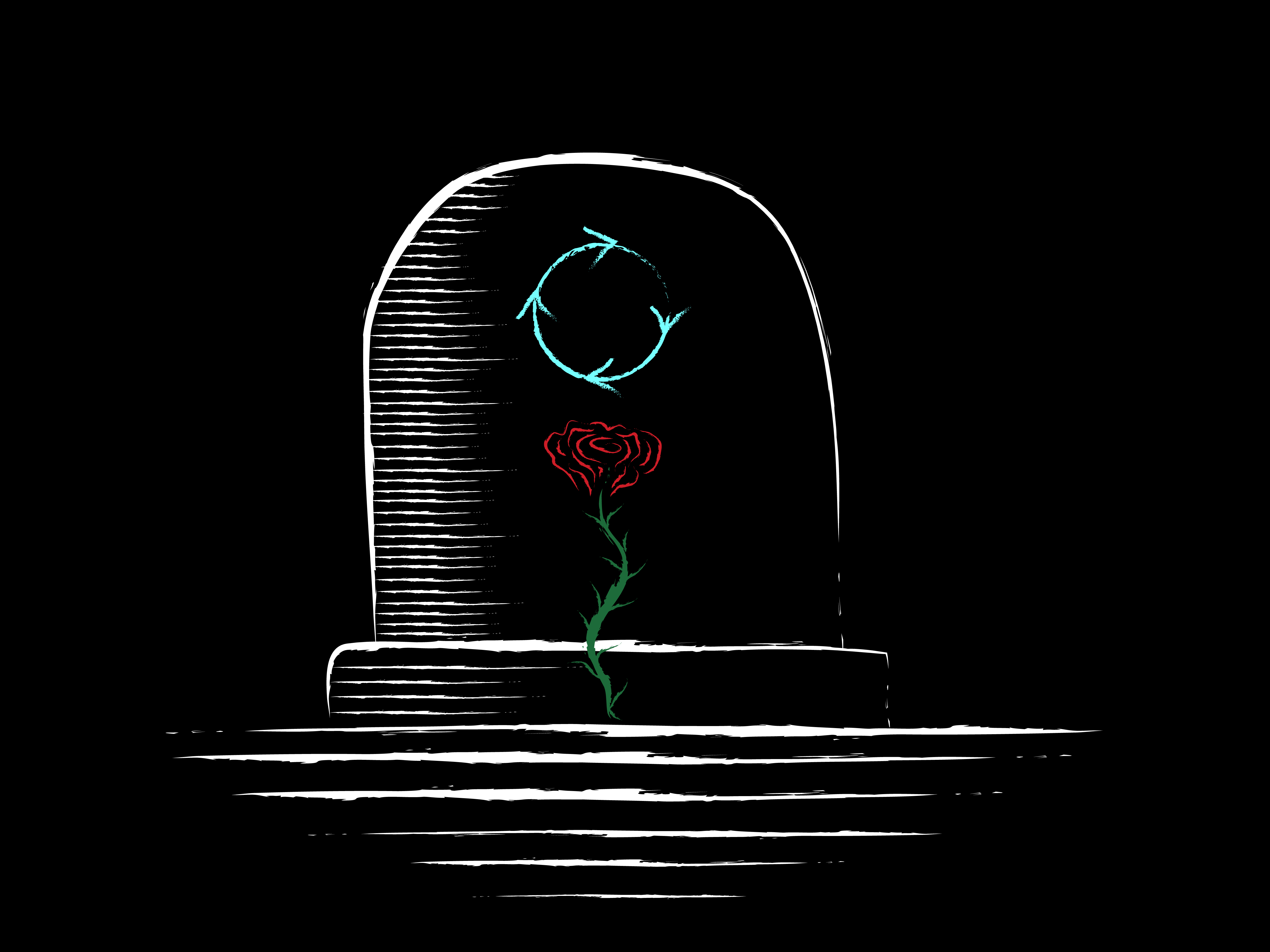
The Death of Projects
Introduction to Art Funerals
Most things come to an end, and for a lot of living things, that end seems to be death. For art, there are two types of death. Art, which is tangible and physical, can die a physical death; with its destruction, it can be obliterated into unexistence. Art, which is less tangible and of a more metaphysical nature, however, can’t be destroyed. You can burn a paper sheet of music, but you can’t remove the song physically from the hearts and brains of the people it’s living in. There’s the second type of death: forgettance.
The song dies when it’s forgotten. This is true for all of human culture, and as long as we live, these mental entities live with us. Art, like ghosts, can haunt generations, and they live amongst the crowds in civilised society, as well as the lonely hermits. Traditions are these ghosts that haunt us, and perhaps it’s their fear of being forgotten that makes them tighten the ropes, and we are no better trying to reinvent culture - to slay the ghosts of our ancestors and create a spectre in our own image. As with all things, there are benevolent and malevolent actors, and while some things are worth remembering, some are best forgotten.
The worst of the murderers are the creatives, however, and anyone who has attempted any kind of art has undoubtedly washed their hands over and over trying to rid themselves of the blood they’ve spilt. This is true because most art dies at the hand of the artist, and perhaps the most prominent death isn’t that first physical death, but rather the second. They die this death slowly as they are abandoned by their creator. This may sound gloomy and terrible, but I’m here to tell you it’s not, and that the death of a project could in fact be a good thing.
Allegories and metaphors aside, death is a scary and fundamental part of life, and it should be remembered and contemplated but not glorified; it should be treated with respect and sincerity, and it’s best to approach the death of projects in the same way.
Saying goodbye can be difficult, especially to a beloved project. This essay is about learning to let go and see what positives can come out of letting projects die.
Why Some Projects Die
Not everything you want to be made will be made, not everything can be made, not everything should be made. That's ok. Every creative goes through a stage of thinking they're the exception to this rule, that, through perseverance or dedication, a project can be made. Exactly why projects die can be difficult to pinpoint; sometimes they’re too ambitious, sometimes you don’t have the resources. Resources are financial, time or just the right artistic know-how. These failed projects are stepping stones towards the real important ones.
Some work is simply preparatory, and it doesn't need to reach a finished stage. You can take the bones from that project and, with autogenesis, bring new life from what was once dead. Their time wasn’t right, or perhaps someone else has finished it. Maybe the project died so that you could take some valuable lessons with you - like scaling it back, rethinking core concepts, or maybe it just needs a little bit of time.
Art needs to sometimes sit for a bit, it needs to ferment or work its magic like a larva in a cocoon, and that process may seem tedious, and it may seem like the project is dead, but until you’ve fully abandoned it, it’s still alive. You can always return to it, so don’t be hazy in discarding your projects. Sometimes they just need time. Be careful not to let them rot, however, especially in your head. Your mind is a place filled with so much oxygen that no thought will live there for long. Put it on paper or anywhere where you can revisit it later, get it out of your head and don’t let it die in there; that’s the worst kind of death for a project.
Other projects die because you finish them and forget them; they go nowhere, a monetary and professional dead end. These deaths may be tragic, but they’re very natural. Things are forgotten, and not everything you do will be a masterpiece. But they’re just as important, and this death is very natural, and I would say easy compared to the ones you have to kill yourself. Sometimes you have to abandon a project before it reaches its intended end goal.
Avoiding the Sunk Cost Fallacy
Sometimes it's better to abandon a project than see it finished, but it can be difficult to let it die - especially if you’ve invested significant time or effort into it. Trust your gut instinct on this one. I’ve had many paintings I’ve spent a lot of hours working on, only to restart them or do something else completely. If you’re not happy with it, let it die and move on. It’s important to try to avoid the sunk cost fallacy.
The fallacy states that we’re more likely to be attached to something we’ve invested time, money or energy into, and even if we know we would only lose more time, money or energy from it, we still believe it’s better to hold onto it rather than stop now. It’s also sometimes called the gambler’s fallacy, because gamblers are prone to keep playing, the more money they’ve spent, thinking they’re “due” for a win soon, because of the amount of money they’ve put in.
Instil it in your mind: Sometimes you have to kill a project. Don't let the death of a dream keep you away from other dreams. Don’t let a project which is draining you take that life from you or from your other projects. It’s a victory to accept one defeat to prepare for the next battle. Try your best to learn to let go, despite the costs you’ve sunk into a project. If you know in your heart of hearts that the project is dead or not going where you want it to, then it’s better to cut it off now than later. The sooner you can throw it on the compost pile, the better.
Decomposing & Recycling Ideas
Decay isn't a movement of destruction, but recycling. Nature doesn't destroy things into nothingness; it decomposes the previously living to create something new. Life is cyclical in nature, and so it is in the artistic life. Keep those dead projects close to you; maybe you’ll find a pot to put them in, so that they may nourish your magnus opus.
Projects never truly die to the artist; there are always bits and pieces that get recycled and turned into something new. Maybe they’re just churned into experience, but no matter what, everything you do turns into something you can take with you - even if the end project dies.
Maybe the project was struggling because the pieces you had didn’t fit there; they might fit somewhere else, though. Take the time and care to make sure you really decompose your dead projects. Take the experience with you, and document and reflect on the work you do. What did you like? What didn’t you like? For organic material to become nutrient-rich soil to feed plants, it needs to be broken down.
Pick it apart, put it back together in a different way, or maybe even in the same way. Dissect and analyse - become an artistic worm or fungi and break down art into nutrients to feed the dreams of the world. Perhaps if you don’t find a use for your dead projects, someone else might.
It’s amazing what another perspective can do, and perhaps what you missed, someone else will see. Don’t keep your dead projects to yourself; share their story, the journey, and you might find that perhaps that was the real project.
These are the good things that come out of a dead project, but there’s another reason to let projects die. Namely, the bad they can bring with them.
Carrying Deadweight
As difficult as it can be to let projects die, sometimes the negatives outweigh the positives of trying to keep them alive. Refusing to let go can lead to creative burnout, to creative blocks and to a whole ordeal of depressive affairs. It’s a struggle to fight against a blockage and to fight a losing fight. It can stop us from working on other, more fulfilling tasks, and sometimes a death is as quick as a restart, and that’s all you need to save a project.
The fundamentals are very important, and how you lay the foundation will define any artistic project you do. If you get sloppy for any reason, you might mess up a tiny detail, it doesn’t have to be because you're lacking in artistic ability, you could’ve been tired, mentally drained or just not in the right headspace when you started. But that start will define the rest of the project. If you start it off on the wrong foot, it’s probably better to start over now than later.
That’s the wonderful thing about art: you do get to start over. That’s not true for most things in life, so take that rare opportunity if you get it. You can paint over something, you can re-record, or you can rewrite the one sentence that doesn’t feel right. Don’t ignore your instincts. If something feels off, it probably is.
You might try to push past it, thinking it’s not going to make a big difference. God knows I have, and then you sit there a hundred hours later with a painting that is finished, but you can never love it because of that one mistake in the beginning. The burden of deadweight is something you will have to carry if you don’t learn to say goodbye to projects.
Focus on the positives, how you can make it right, the experience you’ve gained and how the project will feed future endeavours, but also remember the negatives that come with hanging around the living dead.
Summarising the End
It’s important to remember that the death of a project isn’t the end of it. It can be recycled, reused or simply restarted. Letting go is a difficult thing, and while it is never easy, it does get easier.
Projects die for different reasons, and not everything can or should be made. Don’t let your ego take the driver’s seat and be real with yourself. I love defying the impossible as much as the next person, but you can only do that if you first defy your delusions. Some projects die because it’s not the right time, others are finished but never go where you wanted them to go. Keep them near to you, and don’t bury them until you’re absolutely sure they’re dead, and when you do, make sure you compost them so that you may take from them the nutrients to feed your greatest achievements.
Avoid the sunk cost fallacy, and don’t let yourself be fooled by the amount of time, money and energy you’ve sunk into a project. Sometimes it’s better to cut it loose before it drags you down. Carrying deadweight brings a lot of negatives with it. Projects can become emotional, financial or energetic black holes that just suck the soul out of you. Remembering the negatives is important, but also focusing on the positives that the death of a project can bring.
That also isn’t to say abandon a project as soon as it gets difficult. It can be hard to tell when you should let go, and it takes a lot of intuition and experience to be able to readily tell. Trust your gut more than your head. Perseverance will get you far, but wisdom even further. Understanding where and when to focus your energy is vital to that, because stamina might make you break through a wall, but perception lets you see the door. Save your energy for the fights that really matter, for the projects that really need it.
Don’t be too hard on yourself, and learn to let go. A vital part of being an artist is understanding that not all projects will succeed, and it’s a good life lesson to understand that the death of a project isn’t the end of it, nor the end of you. Take with you the positives, the experience, the ideas and do something else with the dead. Treat them with sincerity, and self-reflect on what went wrong, what went right, and you will be better off for it.


