
The Two Kinds of Walks
Introduction
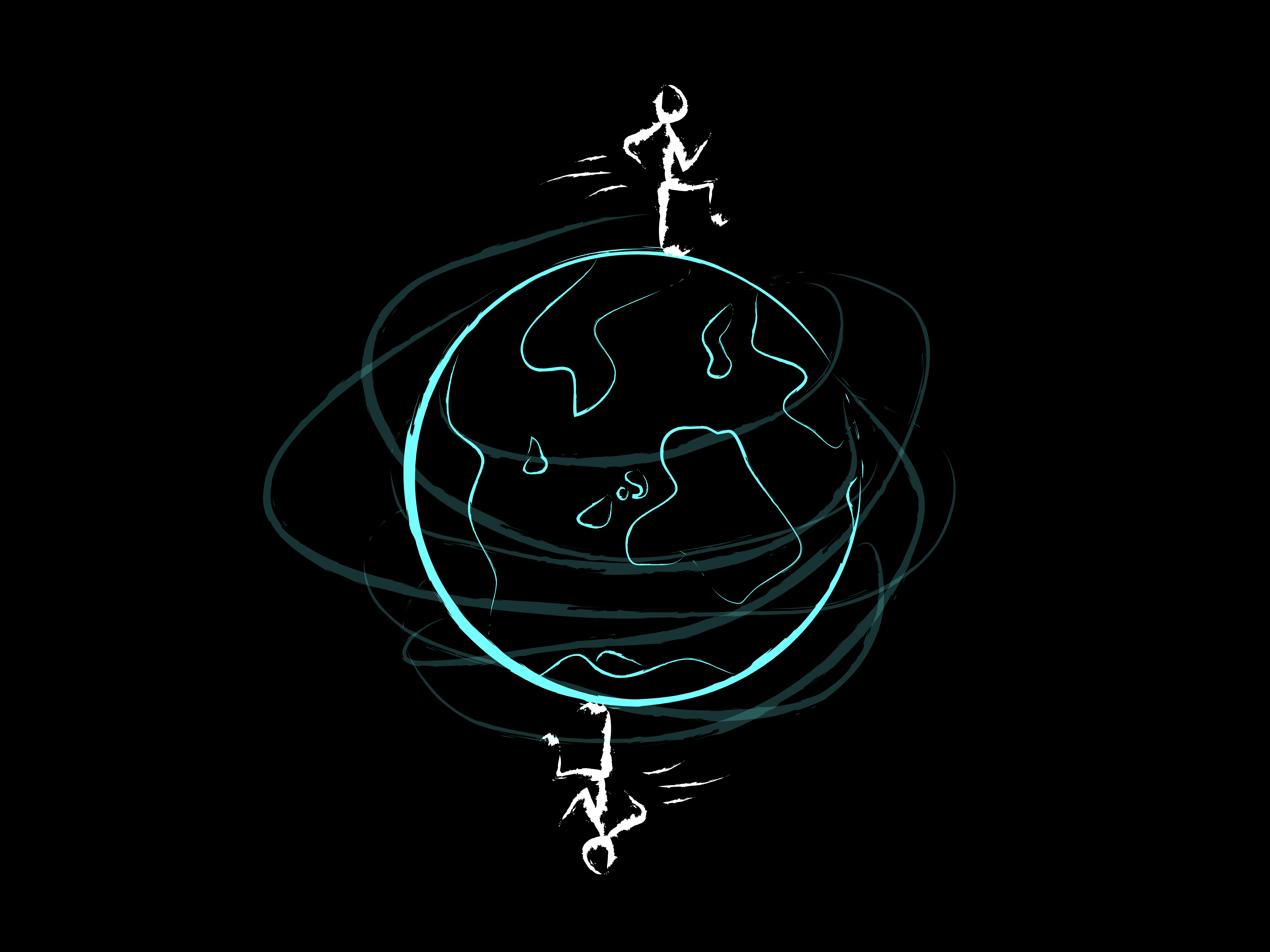
In life, there are fast walkers and slow walkers, but both are walking; what really determines the kind of walk you’re on is the path you’re taking. Are you exploring new terrains, mapping out urban mazes, or are you walking in a familiar circle you’ve already walked a hundred times? These two kinds of walk offer two novel approaches to exploration and insight. We can divide these into the physical and mental exploration.
The first kind of walk is walking an unknown path, turning a corner you haven’t been around before, and it entails exploring your physical environment. This walk is stimulating for people because there are new things to see, new landmarks to map, and inspiration to be found in the environment.
The other kind of walking is routine, and it doesn’t offer much in terms of new sights, but what it does allow for is a deeper inner exploration. When your body and senses know the path you’re walking inside and out, you can shift that focus from the outwardly to the inwardly.
In your life, you will make both kinds of walks, and one or the other isn’t better than the other. Today, we’re exploring both sides of these diverging paths and diving a little deeper into each. I’ve found in my life that people usually have a preference for one or the other, and I have to admit I am much more of a walk the same route every single day type of person, but sometimes life can feel a bit like you’re stuck if you only do the same thing every day. Routine and discipline are great, but sometimes you have to break from that monotony.
The First Path: Physical Exploration
The first kind of walk is that of physical exploration; it’s about externally mapping your physical reality. Finding your favourite spots, or maybe even your favourite route to take. Through wide dominion, there is more to the earth than any human eyes could ever see, more than any human could experience, and in its vastness, there is an infinite beauty; no one in their entire life shall have seen the ends of the earth. Fear not, you will never run out of things to experience, and there will be much to see.
To a lot of explorers, this is the allure of adventure, the novelty of new experiences, and the riches which you can bring back with you. It doesn’t have to be gold, ancient relics or anything material. Sometimes the knowledge itself is the real treasure. To see the wonders of nature and the marvels of man, sometimes that is the goal. Wherever you go in the world, people have created art, they’ve constructed homes, and they’ve decorated almost all the space there is. If the toil of human hands is not to your liking, then you can enjoy the wonders of nature.
These experiences enrich and inspire, whether it is by the work of your fellow man or it is creation itself. Navigating and learning a new place takes some mental effort, and taking in these impressions trains your mind, like any other muscle. Novelty can create new neural pathways in your brain, and these pathways connect between the internal and external. New paths aren’t always easy.
It may take you through shrubbery, thorns, and sometimes you’ll find yourself at a dead end, with no other choice but to go back. Variation is the spice of life, and finding alternative routes, even in areas you think you know well, can be very rewarding. Not everyone who wanders is lost, but when charting unknown territory, you always run the risk of losing your way.
Being lost can be a scary thing, but it can also be thrilling. When exploring novel paths, you'd better leave your fear of the unknown behind. You have to be willing to be lost, and you have to embrace every challenge that arises. Making the most out of exploration is encountering it with openness and readiness for whatever may come. There’s a lot to learn in these new places, and a lot of new things to discover. Inspiration is all around if you have the eyes to see, but I personally find that the familiar opens up an inner exploration.
The Second Path: Mental Exploration
At the heart of meditative and contemplative practices are familiarity and sameness. It’s about reducing outer stimuli to increase or shift the inner stimuli. I love walking the same path every single day, because it offers a sense of safety, a routine and a boring familiarity which really lets your mind wander with you.
The brain doesn’t have to concern itself with mapping out new things; it can spend its energy doing something else while the body works. It knows the path, it knows the trees, the buildings and more often than not, nothing new happens on familiar streets. All that mental energy can be spent thinking about other things, solving problems, or creatively engaging with imagination.
It’s a great time for reflection, exploring ideas, or even getting deeper into presence and mindfulness. Some zen traditions have a style of walking meditation, where instead of sitting down and closing your eyes, you focus on your breath and steps to connect to your body and silence your mind. The best kind of familiar path is the one you know so well that it seems to dissolve time.
The first time you take a walk on a path can feel really long; this is the effect of novelty on our perception of time, but the more you do something, the shorter that perception becomes. The second time you walk that path already feels shorter, and by the time you’ve walked it 10 times, you’ll notice how quickly that time passes. It becomes almost hypnotic and definitely trancelike, allowing you to enter a calm and relaxed mental state with a close connection to the subconscious.
When the line between the two states is that thin, then mental activity is increased, and you’re able to think in a completely different state of clarity and focus. Thinkers, artists and laymen throughout time have known this, and a famous example was the Philosopher Immanuel Kant, who was dubbed “the Königsberg clock” by the locals because at the same time every day he would go for the exact same walk. This, along with other parts of his daily routine, was for Kant the foundation of autonomy, because by automating the mundane choices of his life, he could free his mind and not have to worry about decision fatigue.
Several other famous people have talked about combating decision fatigue in their day-to-day, by wearing the same thing every day, like Mark Zuckerberg, or by eating the same lunch every day while writing, like David Lynch. The latter always spoke about safety and comfort as prerequisites for artistic exploration, and walking the same path every day is another aspect of it.
Final Words
There are two kinds of walks - both explorative, but different in the environment in which you wander. Both are good, and you should never deprive yourself of a walk if you have the opportunity. Walking is wonderful; it’s great exercise for both body and mind. No matter what kind of walk you go for, you should always try to breathe through your nose. If you’re the adventurous type who’s looking for new experiences, then the first kind of walk is perfect for you: the novel physical exploration.
This means mapping out your surroundings, seeing new things, and charting unknown territory. Every walk starts here; at some point, it will be the first time you walk a new path. Eventually, you might have walked it a thousand times, but every walk starts this way. Some people are more inclined to look for new walks, alternative routes, and they get a kick out of seeing new things, remembering new streets, and taking in the environment. These kinds of walks are important now and then, even if you prefer the familiar. Variation is the spice of life, and it’s good to break out of your comfort zone now and then, take a walk on the wild side. Find out what’s around the corner you’ve never gone, and see the world for yourself. There will be plenty of time to take your favourite route.
The second kind of walk is that of a mental exploration. This entails the monotonous and pre-established route. It means repeating the same walk over and over again. This allows for internal mapping rather than external. This is a walk which allows for creativity and freedom through allowing the mind a safe space to wander without new impressions and new details to remember.
After a while, these kinds of walks become meditative, and you can really get lost in your own thoughts. They’re less externally but more internally stimulating, and allow for creative exploration through imagination or effective cognitive problem-solving. These are the kinds of walks I’m personally inclined toward, and they’re an important part of my daily rituals as an artist.
Some people don’t like these walks because they’re ‘boring’, but boredom is just the thing you need if you’re a creative person. If you’re an artist, you don’t avoid it like the plague; you actively seek it out, and you embrace it because you know it’s in that stillness you find the real artistic gold nuggets. To the artist, it’s an invaluable companion and often a requisite for the creative process.
If you go for a boring walk, you might be surprised by how thrilling it can be.


