
Performative Intellectualism - The Artistry of Great Minds
Introduction
One of the most popular literary genres is pop-science, which, along with another literary giant in the form of true crime, treads the line between performative fiction and non-fictional writing. Oftentimes we distinguish between entertainment and education - we believe that smarts and intellect have to be boring, numerical and entirely rational, whereas performance and arts are emotional and fantastical, often liberated of rationale and reason. But what if that line isn’t as clear as we think?
It might go without saying that there are many types of intelligence, but this essay will look at performative intellectualism. That doesn’t necessarily mean superficial or fake intelligence, but rather the aspects of perceived genius which can be attributed to artistic creativity and human expression.
While some of our greatest minds have been great at conducting logical and lateral thinking, most of them have also been performers of some kind. It’s necessary on some level to want to write a book because that part of human expression is artistic. There’s also sometimes this notion that artists are lofty, airheaded and that the culture is opposed to intellectualism, but there is a lot of crossing pathways, and to be a great thinker, you also have to be a good performer, and to be a great performer, you also have to be a good thinker.
"To make art, you have to be civilised, and to be civilised, you have to learn" - unknown
You must know philosophy, theology, music, maths, history, psychology and much more to be a great artist. This was for a long time part of the curriculum for a “civilised person”. It still lives on in the Liberal Arts, which include both creative and artistic fields as well as natural scientific ones and the social sciences. These have been a part of higher education in Western academia, dating back to classical antiquity, but have expanded since. A free man was to learn how to think but also how to express themselves, and to live a cultured life was to partake in all aspects of introspection as well as expression.
This is not only baked into our society and culture, but into our very being as humans, and our inclination towards fiction and myth isn’t just entertaining but also educational. For most of our history, our way of learning has been through storytelling.
The Power of Storytelling
Today, we want summaries, synopsis and timestamps, especially in the lived hustle culture. People skip the unnecessary “fluff” and think it’s all about strategy, all about information, but that’s not how we’re wired as people. Storytelling is part of our DNA, and one of the best ways we can learn something is to delve deeper into it.
Storytelling isn’t just about making concepts more entertaining; it’s often a more immersive way to learn. Because the more time we spend with something, the more we remember. Stories aren’t just filler; they’re how we’ve passed down culture for ages. There are probably movies or books you enjoyed many years ago, and while you might not be able to recall characters or specific events, the overarching narrative probably stuck with you.
Chip Heath did an experiment at Stanford University where a group of students were given a presentation and later surveyed them about what they recalled from the presentation. About 5% remembered the statistics presented, and about 63% recalled the stories told in the presentation. This experiment shows the power of storytelling.
It’s no wonder then that pop-science and true crime are so popular, because while we know the authors add fluff and maybe don’t cover the science through a technical lens, that creativity and flair allow us to better absorb the information, and this is both for good and bad. Because we often come to associate great performers with intellectuals, and while there should be a balancing act between the two, sometimes we get tricked by grifters and con men who use the performative side of intellectualism for selfish gains.
A valuable lesson I took away from a course in rhetoric I did in university was that the message is only second to the way you deliver it. With the right performance, you can express and convince others of almost anything, and there is a real moral weight to this knowledge, both for scientists and artists. As a discoverer or deep thinker, you have an obligation to share your insights with the world, and if you have something of real value that needs to be delivered with some performance, and on the other hand, if you’re a great performer, you have an obligation to deliver valuable information and truth. The two must go hand-in-hand and not struggle against each other.
These insights, moralities, virtues and more survive through art. In religion, they’ve been passed on through allegories, storytelling, music and visual art, and there’s always been this level of performance to the most intellectual and mental aspects of the human psyche, until quite recently, when we’ve begun to separate the two.
In our modern era, art should be liberated from thought and thought from art - both to be distilled to their purest essence and kept separately. Entertainment is to distract and misguide people, and knowledge is to be occult and secretive, hidden behind a technical language only interpreted by a select few. Worse still is when two meet, and they separate like water and oil - where we become misguided by performative intellectuals, and we fall back into seeing only the performance and not the ideas behind it.
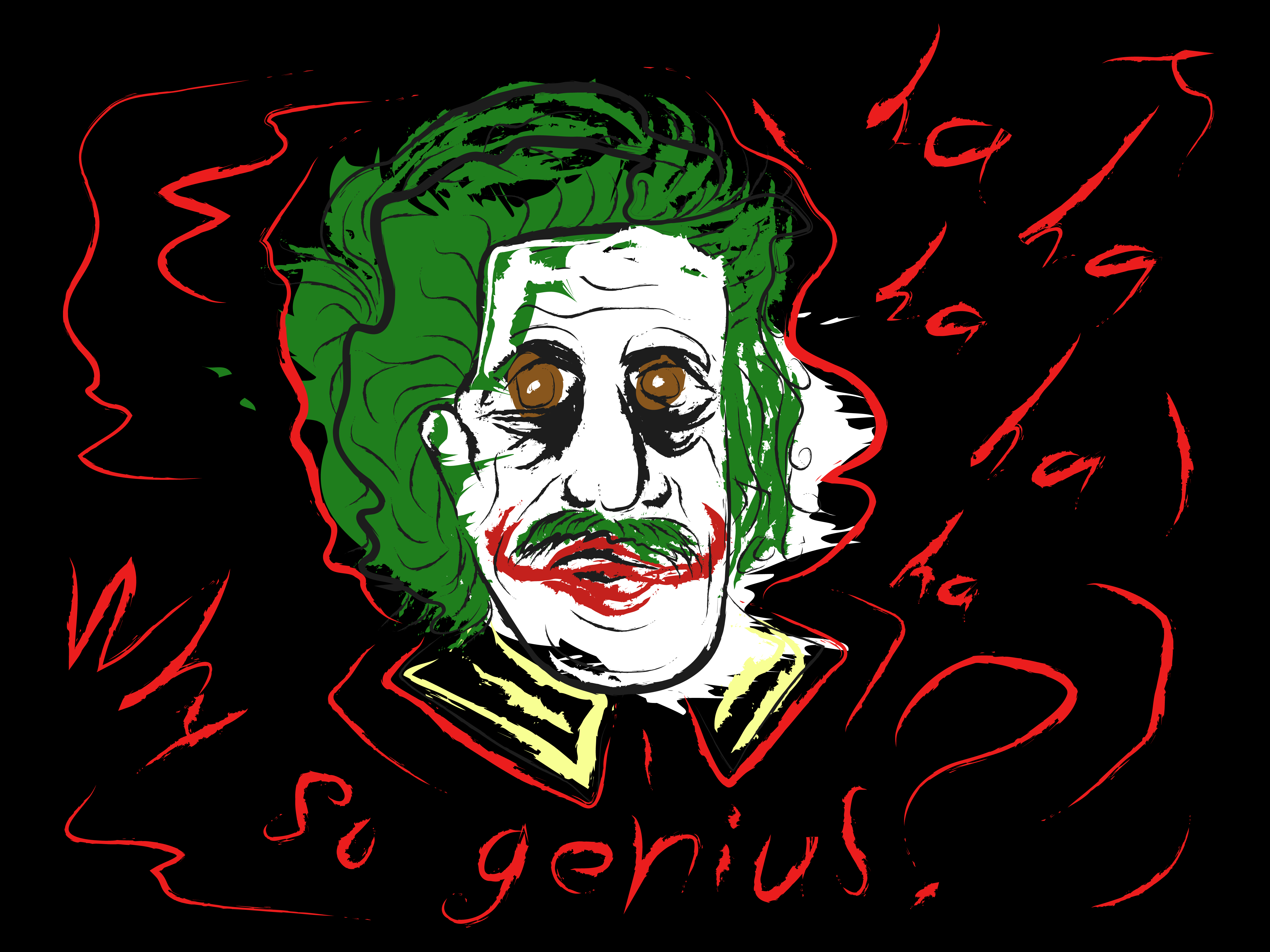
Another aspect and example we often see of this performative side to intellect is the personal myth behind great minds. Often, the personal myth becomes more prevalent and widespread than the ideas of the individual. Philosophers become eccentric characters, and we become more engrossed in the life stories and biographies of our greatest minds rather than their inventions, conceptions and observations, and perhaps it makes sense, because maybe that’s the best way for us to learn about it, or perhaps it’s such an important aspect of their realisations that we can’t dismiss it entirely.
The Personal Myths Surrounding Intellectuals
The personal myth paints philosophers as eccentric characters, it makes mathematical geniuses into legendary thinkers battling against draconic irregularities, and it creates stories around individuals whose thoughts were extraordinary, but perhaps not entirely unique.
It is these personal mythologies that make people famous and recognisable, and while a philosopher and a layman might have come across exactly the same thought at some point, one was recorded and expressed and forever memorised into the collective consciousness, while the other was perhaps lost in the everyday chaos of life. Our greatest minds are often remembered for their eccentric personalities and quirks rather than their discoveries or observations, and as part of this mythos of them as geniuses, we also shroud them in this artistic veil, painting them as unique and perhaps something more than just mortal men.
More people probably know the famous personal stories of these people than their ideas and writings. Nietszche as a tormented and isolated soul plagued by isolation and mental anguish. Camus as a charming lady’s man, or Kant as an avid walker and coffee drinker. Marx, as a drunk bohemian, asking his patron, Engels, callously for money. These stories are reminiscent of the personal myths we attribute to poets, fictional writers and rock stars. In this way, we can begin to understand our greatest thinkers as artists and their work as performance.
The very art of authoring a work is inherently artistic, and to be understood, and more importantly, enjoyed, it has to be on some level artistic. The legacy of these people is often invisible mountains of labour, and what stands out to the average person are quick, quotable snippets of mental brilliance, rather than heavy and lengthy essays into the nature of the world. How many people can recite Einstein’s most famous theorem? On the contrary, how many can recite at least one of his famous quotes? One which illustrates this very point is:
“Imagination is more important than knowledge”
This sentiment is also echoed by Leonardo da Vinci and many other polymaths and geniuses throughout the ages. It is creativity, curiosity and imagination that drive man forward, not just wisdom and knowledge. There is virtue and value in wisdom and knowledge, of course, but without being performed, they’re lost in the inner sanctum of a reclusive mind.
Engaging with society, with culture and with the deeper mental faculties of our psyches is, on some level, artistic and imaginative. Great intelligence is enhanced by creativity and emotion, just as creativity and emotion are enhanced by knowledge and wisdom. The sciences and arts are not at odds with each other; they’re fundamentally connected. There are no entirely rational and logical individuals, just as there are no pure emotional psyches - they’re interconnected, and we can develop and engage with both aspects of ourselves, and perhaps we should.
Fiction and storytelling aren’t just for children; as much as we like to pretend it is, it is an integral part of being human, and it is part of our intellect, and to engage with it is not childish or anti-intellectual.
Summary & Final Words
While we often distinguish between performance and intellectualism, there are several areas where the two overlap, and to reach either’s fullest potential, the two need to be integrated rather than segregated. There’s always been a certain level of performance to the intellects of our greatest thinkers, just as there’s been a level of intellect to our greatest performers. While we now, more than ever, perhaps believe the two to be different polarities at odds with each other.
Our most prominent examples of great thinkers are all examples because of their capacity to perform not only mentally but artistically as well. Channeling artistic qualities like creativity, imagination and expression to labour and manifest the treasures of their minds, only to share it with the rest of the world.
Storytelling and performing is part of our heritage as people, it’s been fundamental to our culture and to our education, and it’s been shown that people are more likely to remember stories than stats, and perhaps that’s why we look to the personal stories of our greatest thinkers rather than their theories. That isn’t to say that the theories and the mental labour of these people isn’t what has changed the world, but it’s survived thanks to their ability to express it. Ultimately all human ideas and ideals will be hindered and filtered through language and art and our ability to communicate those inner visions will only be as great as our ability to express it to another. Some things get lost in translation, some are never realised but a lot is also manifest through this performance.
Reductively sometimes you hear someone say “all is art”, every aspect of living; the way you dress, speak and carry yourself are all artistic expressions and perhaps there’s some truth to that. We often create personal mythos surrounding individuals and oftentimes these myths become etched into the collective consciousness just as much, if not more than the theorems and conceptualisation of these minds.
There is a balancing act between the two, and the performative side of intellectualism is just as important as the intellectual side to performance. The human psyche isn’t strictly black and white, it’s not divided down the middle into rationale and emotionality - both come together to create a holistic psyche, and to excel at either the two need to be integrated into a full being capable of performing (manifesting or bringing to life) the intellectual (mental and conceptual) - the power to do this is and bridge the gap between physical and mental is that of the human soul.


