
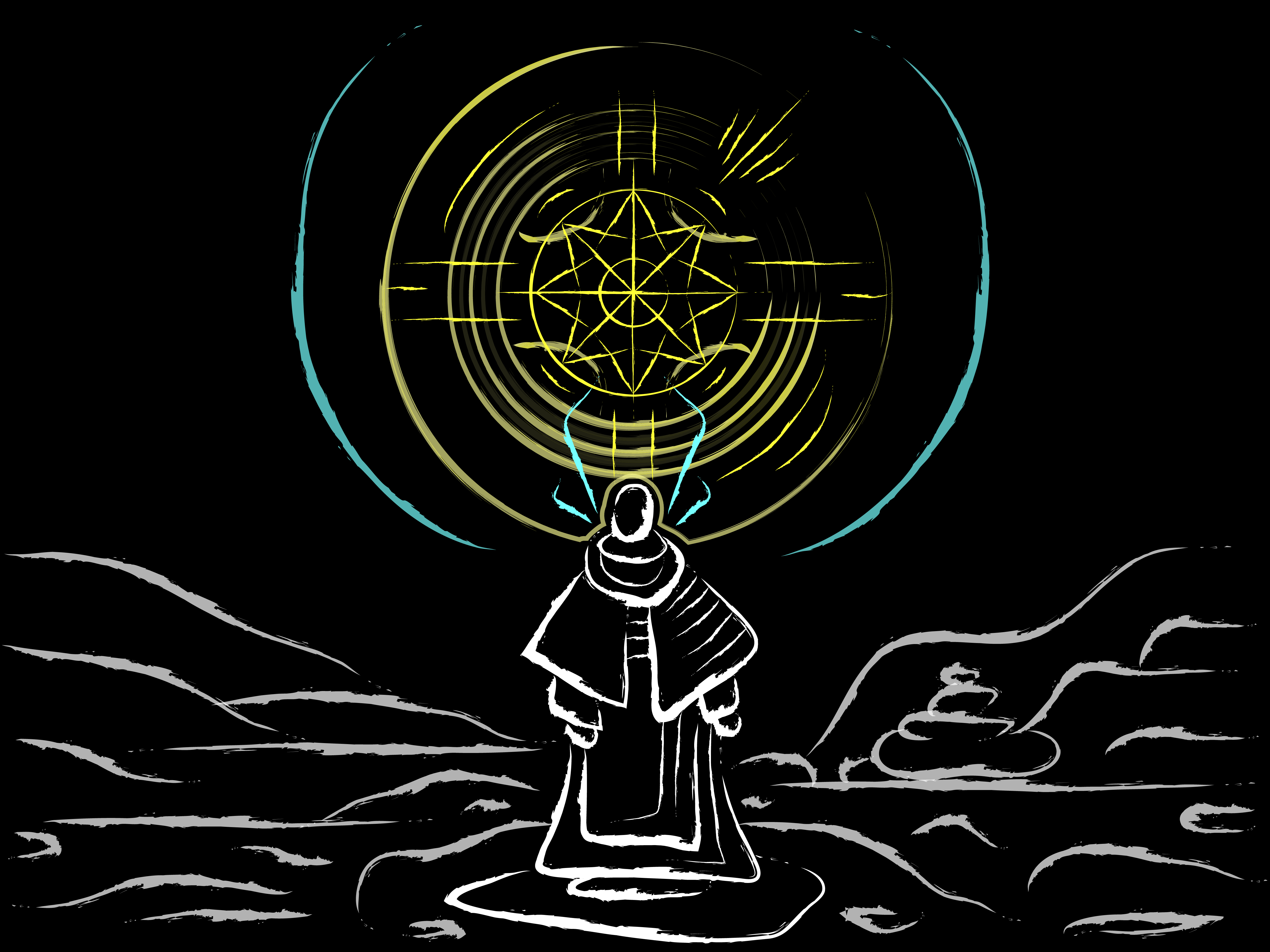
Humbleness & Greatness
Introduction - What is Humility?
“Success is born out of arrogance, but greatness comes from humility” - Marco Pierre White
Humility is one of the traits that are often expected to be exempt from great people, and especially creatives. We often expect flamboyance, egotism and hedonism, quoting Voltaire:
“You must have the devil in you to succeed in the arts”. We expect loud rockstars who trash their hotel rooms, rappers who flaunt their wealth and all manner of musicians to indulge in drugs, sex and rock’n’roll. The last thing we expect of the eccentric is humility. To succeed in this world, you have to be brash and bold, and in the attention economy of the modern world, amplified by social media and internet clout, is there even a place for the humble?
This essay will look at humility and greatness, discuss common misconceptions, false humility, and how true humility is a pathway towards greatness. First, let’s better understand what humility really means.
The word itself comes from Latin and is derived from the word “humus”, meaning earth. A humble person is grounded or “from the earth”; there’s a level of imperfection to this, especially in a religious sense, where heaven is above the earth, and the mundane is often considered to be wicked and an imperfect impression of the ideal. Historically, this has perhaps coloured how we sometimes understand the term: it can be associated with a low opinion of oneself or self-abasement, but the truth is that humility is so much more and while this opinion of it as some sort of lack of self-confidence or low worth can still be found in some circles, there are more modern psychological and philosophical definitions that definite as “having an accurate opinion of self”.
This includes expression of modesty appropriately, possessing realistic goals, and a certain level of openness. It’s a well-balanced trait that doesn’t veer to either delusion: either of smallness or greatness, but understands firmly that the self often finds itself somewhere in the middle of things. These and more are very important to a creative person, especially one who seeks to truly fulfil their artistic potential.
Recognising and understanding the limits of your own ability is part of that, but also recognising the virtues, talents and other positive qualities of others. Especially if those qualities exceed one’s own. A prideful person will never learn because they think they know better than their teacher, and a humble person will find lots of lessons even from the most ordinary people.
A truly humble person understands and recognises themselves for what they are: not perfect and not completely irredeemable. They understand what they can do well and what they struggle with, and because of this knowledge of self, they are exalted, especially in their work. They understand what needs work and needs to be improved, but they are also not paralysed by crippling self-doubt.
To cultivate humility is to cultivate a truer sense of yourself, your work and life. To understand yourself inherently leads to humility, and vice versa. Humility comes from the truth of things, and it’s not something a humble person thinks about. You don’t become more humble by attending a 10-week course on “how to be humble”, you become humble by self-introspection, honesty and developing a discernment of things. When we dispel our own delusions and rid ourselves of self-conceived misconceptions, we will begin to be graced with humility.
Misconceptions: The Confidence in Con-Art
You’re probably aware that a con-artist is someone who tricks and deceives, swindling with the intent purpose of exploiting their victims. But did you know that the con stands for confidence? A confidence man exploits and deceives the confidence the other party puts in them, and uses it for selfish gain. As a scammer, the key is to gain the confidence of the other, and this is often used by feigning your own confidence.
We are constantly fooled by lesser people into believing they’re better than they are. Loudmouths and con-artists bombard us with self-glaze and self-praise until we’re overencumbered mentally and perhaps start to believe some of their lies. There are more examples than we could ever list, and they’re everywhere in the current digital climate. People selling courses, telling you how much they earn in a month, using some simple tricks and how truly great they are, and that if you want to be great like them, you have to join their grift. The motto of the 21st century has been “Fake it ‘til you make it”, and everywhere people are embodying this.
Fighting for attention on the internet, the next person tries to be more outrageous, more eccentric and more extra than the last. The attention economy has inflated badly, and more and more extreme stunts are required. Our culture has become self-absorbed and narcissistic, and our modern individualism has blown out of proportion, largely thanks to how much of our daily lives rely on the work of others.
We don’t cook, we don’t clean, we don’t make our clothes, we have someone else repair our dishwashers and all the while we think we’re more independent than ever and that we are the smiths of our own fortunes, and that destiny is firmly in our own two hands. “You have to know your worth”, and you’re the royal minter, you decide to set that price for yourself, and remember that it’s worth more than all others. We make golden idols of our own self-image, and when that image distorts into something we don’t like, we’re quick to play the mental game necessary to warp it back to something grand.
Perhaps we’re not like this, perhaps we are self-critical and care for others, but then we come to an even greater inner schism when we try to find our place in the world. All around are these big egos, these small people, and everywhere we see that they have what we want. Money, time, health, beauty, friends, trips, and all of it at their own doing, by their own hands. We see that these people are playing tricks, and we freely give our own confidence to them, and so we are conned by insecure jesters, and we start to fool ourselves.
Falsely, we affirm: “To succeed, we have to be like them.”
True Confidence is Humble
While we often perceive the narcissistic and self-absorbed to be confident people, true confidence is a lot more subtle. Confidence means security and knowledge of who you are, what your values are and where you stand. It’s stoic silence in the face of adversity, like a tree in a storm, true confidence is of the earth, and it’s a humble expression. What need do you have to convince others of your worth if you know it yourself? What pointless and vain self-praise do you need to for all to hear? A truly confident person is humble.
It’s our insecurities that make us loud, and our own dysmorphic self-perception, which leads us to want to manipulate how others perceive us. It’s our own worries of not being worthy that lead us to desperately tell others that we are worthy. If we knew our own worth, we would not be dismayed or bothered by hagglers; we remain confident and humble in the truth.
When you’re confident about yourself, your ability, and your knowledge, you don’t have to brag about it or convince others through talk. Doing is enough, and your own self-perception doesn’t change by others’ assumptions and views. Confidence comes with honesty, and we have to be honest with ourselves. This is especially important to guard ourselves against false humility.
False Humility and Spiritual Ego
False humility and spiritual ego are not the same thing, but they often go hand in hand; they denote a state of self-perceived virtue for selfish reasons. It’s false humility because the humbleness comes from a place of pride; a wish to be perceived as virtuous, stoic, confident, and to exude humility and receive external praise for this quality. The falsely humble deprecate their own gifts, talents and accomplishments for the sake of adulation and praise. This kind of false humility is often easy to spot, and the same goes for a spiritual ego.
The spiritual ego has a constant desire to be praised for its knowledge, its practices, and its spiritual accomplishment. It doesn’t shy away from “schooling” others and centers it’s beliefs not around practice and discipline but around the perceived virtue of such a practice. These are found everywhere: performative Christians, thrift-store Pagans, retreat-yogis and religious influencers of all kinds. No school of thought or religion are free of these practitioners, and with it often comes a false sense of humility.
How do you know someone’s falsely humble? You don’t have to worry about it; they will tell you how humble they are. They will gladly share with you how many ego deaths they’ve experienced this last week, how many shadows they’ve integrated and how humbling it was to travel the world to see how the rest of the poor folks have it. Anyone eager to tell you how much humility they have and how spiritually advanced they are - is, at best, a grifter, and at worst, a narcissistic manipulator.
But it can be harder to spot; sometimes, these people employ a more defensive tactic. A false humility can be faked by feigning self-criticism and awareness. They often shield themselves from critique by claiming to take a central and non-defined stance. This leans closer towards people pleasing and is also a symptom of a lack of self-confidence.
These people will gladly debate you, but will make disclaimers like: “That’s just my truth”, “I’m just human and don’t know the whole ordeal”, and “This is a very complex issue with no definitive answer”. This might seem fine and like agreeing to disagree, or perhaps like someone who is actually quite humble, but as stated, humility doesn’t come with complete silence. It comes with knowing where you stand and confidence in what you believe in, not in an inflated kind of way, but in a realistic manner. These stances can be a way to appear humble, but also to shield oneself from criticism.
I’ve recognised in myself that this was often the path I would take in a discussion, and I know these kinds of statements often seem obvious to me. We don’t discuss because they’re impossible questions with a plethora of difficult answers, but we do it to stretch our minds, to test not just the ideas of others but of ourselves as well. I used to be afraid that my self-worth was determined by how well my arguments stood to be picked apart, and while I can still worry about it, I’ve also gotten a lot better at discerning between me and my own worth and that of my ideas and beliefs. Someone disagreeing doesn’t mean they dislike you, or that they even dislike your idea.
I was a smug youngling whose self-worth was often tied to how people perceived me, and I often wanted to be perceived as smarter, humbler and ahead of my peers, and I thought that would make me more confident. But false confidence like false humility never lasts; sooner or later, that image is shattered, and truth comes out, and if that image has been distorted beyond recognition, people will think ill of you. We often don’t dislike people because they’re loud or confident, but what we do dislike is people who fake it.
The human brain is hard-wired to spot fakers, and while we still get fooled a lot, we’re still excellent at picking up little ques, and while we might not have disliked someone for being their true self, if we find that, that self is vastly different from how they’ve been masking, we might feel betrayed, and a betrayal of that trust makes us actively dislike them. It’s better to be your true self and find true confidence and humility in that than to try to fake it. Genuine humility is a path towards genuine greatness.
Humility - Symbolically Small and Significantly Great
When we think of something humble, we imagine something small. The word itself invokes the size of something which isn’t grand or large. To understand the relation between the material and the immaterial is essential to comprehend the significance of humility and its link to greatness. Something great transcends the material, and it doesn’t have to be physically large to be of great importance; it can start as an idea, and what is more humble than a simple thought?
Pride is the eventual downfall of anyone larger than befitting their spirit - because pride leads to arrogance and ignorance, which leads to mistakes and error. The prideful think it impossible for them to err, and they believe that no one but themselves can be right. Dictators eventually fall, and prideful military generals eventually take a bite bigger than they can chew - but we needn’t look at such extreme examples in history. We can look at the minuscule - the criminals, the deranged and the depraved. People who do horrible things do so because they think they can get away with it. Everyone rightfully convicted and serving time for what they’ve done is an example of people who have been caught in the act because they thought themselves smarter than the rest. Could they have gotten away with it if they were humble?
The answer is no, because true humility can’t be connected with these acts. Those vile deeds all come from selfishness, and humility comes from serving others. A truly humble person doesn’t think about humility; they hardly think about themselves. Humility is the cure to selfishness, and selfishness is the root of all evil. This narcissism feeds into envy, gluttony, lust, wrath and all the other deadly sins, because they’re all directed at what the ego wants and doesn’t have.
Remember, we’re all humans, and most of us are not perfect; we make mistakes, and we make errors. We don’t even have to look at these extremes; let’s remember what humility brings. It brings true confidence and true self-awareness. A humble person doesn’t over- or under-appreciate their ability, they don’t over- or under-estimate themselves, they know exactly what they can do and how to do it. These people with this kind of self-knowledge make great craftsmen, great artists and great people.
They don’t underdeliver; they always do their best, and their passion is genuine. It doesn’t come from some external reward of fame or money; they do their craft out of love, and when you infuse that kind of love into anything you do, it becomes truly great. There’s a saying in Sweden which can be translated roughly to:
“One who is happy with the little things has a lot to be happy about”.
A humble person enjoys life easily, they’re happy and grateful for every little thing, and that state of mind is incredibly beneficial for art and productivity. Inspiration and motivation are inherent to such a state, and it births truly great art. We should do well to humble ourselves, and I’ve found that if you don’t do it, then life tends to do it for you, and that’s a painful blessing.
It’s Nice to be Important but More Important to be Nice - Final Words
Humility is a virtue by which we know who we truly are, what our worth is and what it isn’t. It doesn’t make us better than others, and it doesn’t make us lesser; it makes us equal. That can be a tough pill to swallow, and we’re often unwilling to see the darkness in others because it makes us self-reflect. When we begin to understand what it is we dislike about ourselves, we can also begin to understand how we dislike those qualities of others, because it holds up a mirror against ourselves.
We have many misconceptions of what humility is and what confidence truly is, and we often perceive the two to be at odds with one another; however, this isn’t true. When we begin to discern between false confidence and true confidence, we will see how true confidence is humble, and what follows is a discernment between false and true humility.
The falsely humble will gladly tell others how humble they are, or they might try to deflect it and play it a little too cool. We may fool ourselves into believing we are humble, and it will undoubtedly happen if we let our insecurities rule us; it’s important that we listen to others and that we are honest with ourselves. Humility is closely associated with humiliation, and it can be a sensitive thing and even scary, but if we are truly humble, we can’t be humiliated.
We can’t be made smaller or greater by the insults or compliments of others if we truly know ourselves. Humility is the path towards greatness because it’s honest and truthful, it’s not ruled by lofty and selfish goals, but it is directed by true love, and while all of these words may seem vague and unrealistic, we should emphasise that humility means having an accurate opinion of oneself and one’s abilities, talents and possessing clear goals, as well as a certain level of open-mindedness. All qualities which are great to have, especially as an artist of any kind.
Humility is truly great because it ultimately serves others, and as nice as it can be to be important, it’s more important to be nice. When your life is over, people won’t remember what you wore, how much money you made or maybe even what you did, but the people you meet in your life will remember how you made them feel.
If you want to be greater, you should seek to improve yourself, and by improving yourself, you will get a more truthful picture of yourself, and by extension, you will be humbled. Humility is a tricky thing because the more we think about it, the more insincere it becomes. If your actions are guided by “how can I be the most humble right now?” you’re not experiencing or cultivating humility. The best way to start embodying this quality of character is to put others before yourself.
“For those who exalt themselves will be humbled, and those who humble themselves will be exalted.” - Matthew 23:12


