
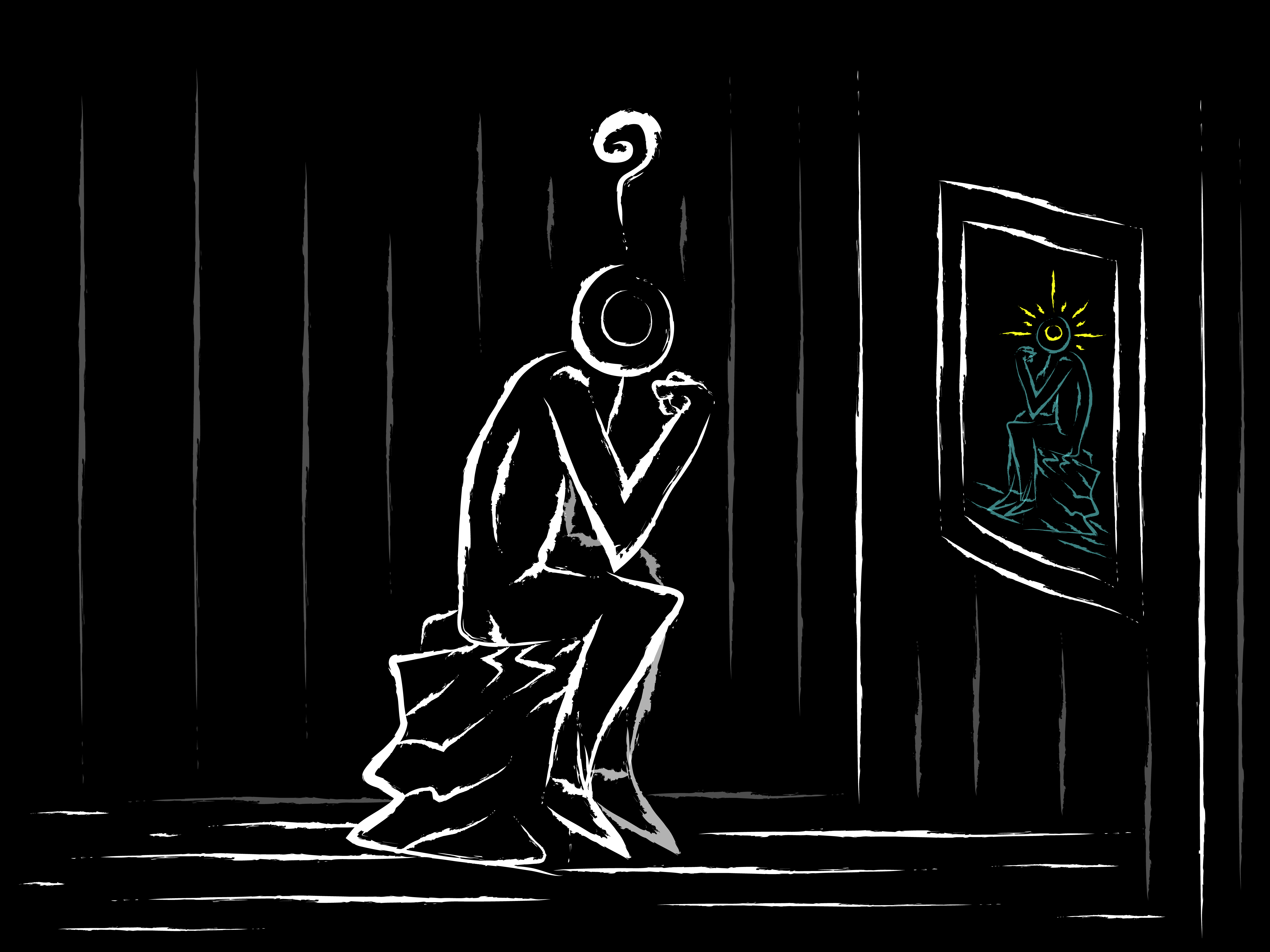
How Art Should be Viewed and Understood
Introduction
How art should be viewed and understood is an impossibly large topic; for this, we will reduce this conversation down to a singular focus: that of paintings. Physical visual art. Art is more than mere decoration, and there’s a reality to decoration we often overlook: more than aesthetics and entertainment, the way we decorate things tells us our stories. Our morals, our values and our beliefs. It’s part of human culture, and it defines us in so many ways. Pray tell, what does this say about our modern times? White apartments, sterile art and lifeless, cut, copy and pasted, mass-fabricated and uniform, complete global homogeneous expression.
A blank slate of postmodern reinvention, a future with no past, and a self with no other. A perfect solitary and independent individual, self-realised and self-actualised through abstraction and deconstruction. There’s nothing inherently wrong with that, but with such an intellectual aspect to the creative process, one has to wonder - how do we process it? Too often, we digest it like our food. Fast and without much thought, as if only through necessity do we overlook craftsmanship and intent behind it.
Microwave meals and fast-food joints serve it to us instantaneously, and art like our food has become engineered to deliver us quick aesthetic and emotional reactions. It relies on shock value, on controversy or simple clichés and political points to accumulate artistic merit. Wonderfully enough, this is exactly what art can do, and what retribution the soul sows it also reaps, and the grains of art can freely be shared between intellects, so that none may starve of thoughts and be left idle without mental nutrition. But how do we collect these ideas, feelings and symbols and turn them into fuel not only for our minds but for our souls? That requires contemplation, and the kind which can take a lifetime.
There are three guiding principles in viewing and understanding a painting:
- Impact
- Exploration
- Infusion
Impact represents the initial viewing. High value at a glance, and only the most striking and well-worked paintings can have this effect, this kind of symbolic power is reserved for masterpieces, for paintings which speak directly and immediately to all facets of the human psyche and soul. This kind of viewing can be done anywhere at any time, and the ability to grab a person is reserved for exceptional synchronicity and beauty. We won’t be discussing this principle much further today; instead, we will focus on the second.
Exploration is the principle of a more contemplative and slower viewing. This will be our main focus today, and this kind of viewing is ill-suited for galleries but perfectly suited for street art and for occupying more personal space. Art is more than a map, and it’s more than a snapshot in a story; it is the story, and it is the journey, and this kind of viewing is to follow in the same footsteps as the artist, but perhaps seeing something else.
Finally, the third principle we will not discuss at all, infusion is a process of viewing which is only accessible through extraordinary means, and in my experience, is exclusive to the reading of genuine iconography.
Returning our focus to the second guiding principle of visual viewing. We will dissect the viewing into setting, and sets: both timeset and mindset.
Setting
The setting is the external environment in which you view the art. The place plays an important role, because it dictates many parts of the viewing experience. Are you seated? Are you standing? What are the colours, the sounds and other possible distractions? Are there other people? There are a plethora of factors that make any viewing a unique experience.
There’s one important principle to any and all viewing of art, and that is the power of repetition and recurring viewing. To best understand a painting, you have to see it over and over again. Galleries often don’t make the best place to contemplate art, because you pass it by, and while something might grab your attention enough to linger around it for a while, you eventually move on and most likely never see it again. It might depend on what kind of person you are; some people never read the same book or watch the same movie twice, while others have favourites they engage with over and over again. Paintings, like other media, may be the same, but as any avid music listener knows, once a song really captures your heart, you usually listen to it until it grows tiresome.
The best setting for exploring a piece of art is somewhere where you can view it in peace and come back to it again and again. You might see the most extraordinary painting in a museum once and never again, and eventually you will forget it. However, the landscape painting your parents have in their living room might be stuck in your head for the rest of your life. Maybe you never paid much attention to it, perhaps it’s a plain and kind of boring piece, but you’re exposed to it so often and every time you sit in that room and the conversation takes a small break, you look back at the painting, you start memorising the brushstrokes and you every time you come back to it, it’s the same painting but there’s something new about it.
The place is so important, and what could be better than the safety and comfort of a home? A painting can be a centrepiece to a room, but it really doesn’t have to be. Sometimes it’s better if it’s just there quietly. Eventually, people’s eyes find their way over to it, when distractions cease or boredom creeps, eventually we turn to the art around us, and if the place is right, it gives us the time necessary to fully dive deep into a painting.
Timeset
It can take hundreds of hours to complete a painting, and with such a large amount of time needed to create a single painting, how can we hope to see all of it in a single viewing? Even if we spend a whole hour analysing the painting, we won’t see all there is to see. To take the journey the artist took, we also have to dedicate the time to it, and the artist presumably didn’t take the trek in a single go, so we must take stops and breaks as well.
Your mind grows weary looking at the same thing for an hour, and if we get tunnel vision, we’ll eventually stop seeing the bigger picture. It’s important to take a step back, look at something else, and return to the painting, and you’ll see things you didn’t see before.
The timeset is important because a painting is a long journey, and to get the full vista, we have to take a similar journey. When looking at something for long enough or often enough, we start seeing mistakes, and we can see how trivial some of the things are that we hold in such high regard. The longer we look at something, the more mundane and simple it becomes, and this is a wonderful thing, especially when it comes to painting.
Because when we understand something, it becomes simple, and when we understand a painting, it too becomes simple. The brushstrokes don’t seem like pure chance, or like some secret method, but we see them for what they are, and we can begin to understand how deliberate they are, and we can really begin to feel them, and perhaps even feel something which the artist also felt. Given enough time, we begin to understand why a painting makes us feel a certain way, and we see the greatness and the flaws, we see the fuller picture, and this can either break the illusion or peel away our nostalgia and admiration and reveal the truth.
Truth stands the test of time, and it is unchanging and seeing it for what it truly is, we love it more, but falsehoods they dispel, and we are disillusioned with their tricks, leaving nothing but emptiness after it. The timeset is the acid test, and it tests not only the painting but ourselves as well. Taking the journey through the painting, we are faced with fears and obstacles, but also triumphs and epiphanies.
To view and understand a painting, you have to give it time and be in the right place physically, but also mentally. This is the final part - the mindset.
Mindset
What kind of mindset should you have for viewing a painting? It’s a tough question, and it shouldn’t be confused with your emotional state. You shouldn’t avoid looking at a painting because you’re feeling angry or sad; maybe those feelings are exactly when you should go deeper into certain work, like the comfort of a sad song. No, the mindset you should have should be similar to that of the artist: it should be open and relaxed for contemplation.
To take the journey into a painting, you should allow your mind to wander; this means letting go of distractions and entering an almost meditative state. This is why the place is so important; it doesn’t mean you have to sit down in a dojo, but it does mean you should be in a place which is comfortable and where you can let your mind walk into the painting when it starts to wander. This art is often lost on us today because we’re spoiled and haunted by screens everywhere.
When was the last time you sat down in a room and just looked around you? If we’re in conversation, we often focus on the person or people we’re talking to, but when it quiets down, we often instinctively reach for our phones to distract ourselves. When was the last time you let yourself get lost in some of the artwork hanging on the wall of your friend’s kitchen? Because that’s exactly the right mindset for contemplating art; without pressure, without planning and with just the right amount of distractions.
When conversations die down, and your body and mind are growing tired, your mind relaxes, and you may begin to explore a painting through this state of flow. Your mind should be disengaged to be truly engaged. Only in a relaxed mental state can the observer's own creativity begin to decipher the experience. You begin looking at not just a pretty painting, but you start to ask questions like: why that colour? Why that detail, and what does this mean? When you ask for more, you get more answers, and you can begin to understand the painting, maybe not in the way the artist themselves did, but in a way completely unique to you.
Paintings are not just maps and road signs; they’re entire stories, and they’re there for you to figure out and delve into. They’re written without words, and they tell tales in such a way that it almost feels like you wrote it yourself, and this magical immersion is something very special and unique, and can only be accessed if the setting and the sets fall into space. Given the right space, enough time and the right mental frame, you will begin to view and understand paintings in a whole different light. By extension, you begin to understand life and yourself in a completely new and unique way, but it requires spelunking, and it requires effort. How to engage with art is up to you.
Final Words & Conclusion
To fully view and understand a painting, we have to explore it and to contemplate it, something which can only be done in the right place, with the right amount of time and with the right mindset. For this kind of viewing, art galleries aren’t the right place. They are the right place for impact and for being exposed to new things, but to fully engage with a specific painting, we have to spend a lot of passive time with it. Paintings should be contemplated in silence and a more disengaged way.
When a painting hangs in your home, you observe it passively and unconsciously. You look over it many times, you find new forms, new colours, new shapes, and you discover new pathways to reveal its story. To me, this is the ideal place to view and contemplate art, and I love getting lost in the works people hang in their homes, because it also extends the meaning beyond the work itself. It further enhances it with more creativity and an artistic touch. Why did they choose this painting, and what does it add to the room? What can it tell about them as people, and what can I gain from being here looking at it? The place is so important because the right place gives the right timeset.
Creating art is a long and arduous task, and it’s not a race; it’s a marathon. The same goes for viewing it, and if we expect to take a similar journey as the artist who made it, we should be prepared to have to spend a lot of time. Time is a magical ingredient when it comes to art; it’s a fundamental essence to all aspects of life. We’re often impatient, but to truly comprehend the fullness of art, we have to give it time, and we have to let it breathe, take breaks and come back to it. You’ll find new things, and time is the true test to reveal the nature of things.
The final piece to the puzzle, which is pondering a painting, is mindset. Just like creating requires mental freedom, inspiration and motivation, so too does exploring a painting. A relaxed and open mind begins to wander, and your mind needs that flexibility to dive deeper into a painting, and to truly begin to take the journey which it offers.
There are as many ways to view and contemplate a painting as there are to paint one; exploring and diving deeper takes the right place, the right time and the right mind, but it is one of the most valuable ways to really get to understanding a piece of artwork. It’s great both from an artistic point but also as just a human, and it can teach us a lot about not only the art, but also ourselves and our place in the world.


