
The Existential Elk Theory
Introduction - Norwegian Philosopher Peter Wessel Zapffe
Peter Wessel Zapffe was a Norwegian philosopher, author and artist. He was born in 1899 in Tromsø and passed away in 1990 in Asker, Norway. His writings are filled with philosophical pessimism and a fatalistic view of human existence. Philosophically, Zapffe draws on the writings of the German philosopher Arthur Schopenhauer. One of his better-known philosophical theses, which we will be discussing today, is his ideas surrounding the existential elk. First, this introduction will cover the idea itself, before we cut up and criticise the thesis and finally wrap it all up.
Central to Zapffe’s work is the idea that human consciousness is “overdeveloped”. Zapffe viewed things like self-reflection, self-knowledge and existential-awareness, to not fit into his view of nature’s design, and came to view it as a faulty evolutionary step. He believed that things like life, death and meaning can’t ever be fully satisfied, and by extension, humanity as a whole has a need that can never be satisfied. The need for meaning was, according to Zapffe, a tragedy. A tragedy which led humans to limit and dull their consciousness to escape the existential burden of self-awareness. Zapffe wrote about four principal defence mechanisms that humanity uses to limit its consciousness and to rid itself of existential angst and to ignore its inevitable fate. Most of these four principles are rooted in psychoanalysis:
Isolation - Zapffe defined it as "a fully arbitrary dismissal from consciousness of all disturbing and destructive thought and feeling". To him, it means distancing oneself mentally and not physically.
Anchoring - Attaching oneself to ideals or social principles, which allows individuals to focus their attention consistently. He noted flaws in this principle's ability to properly address what he believed to be the human condition, and warned against the terrible pain of realising that one's anchoring was false or unstable.
Distraction - Focusing all of one's energy on a task or idea to prevent the mind from turning in on itself.
Sublimation - Refocusing energy away from negative outlets towards positive ones.
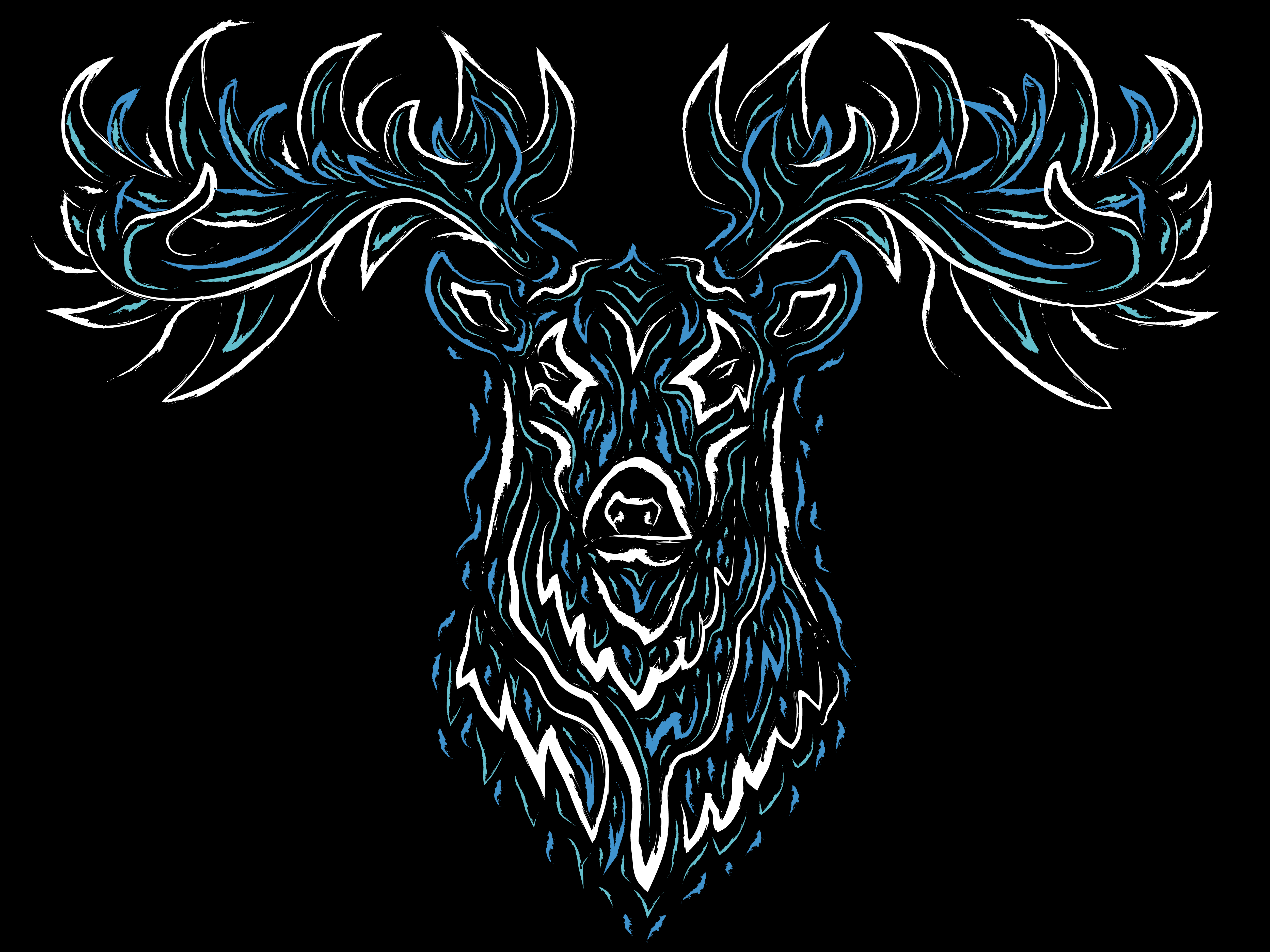
Zapffe eventually presented the metaphor of the existential elk in his writing, and compared human consciousness to the fate of the Irish elk, also known as the giant deer, which was one of the largest deer that ever lived and eventually went extinct. Its antlers could span 3.5 meters across, and were the largest known to any deer. At the time of Zapffe's writing, the most common theory about its extinction was the “maladaptation” of its encumbering-sized antlers.
The theory, which remains popular among some, is that the antlers made fleeing through forests especially difficult for males, as well as being too nutritionally taxing, as the nutrients required to grow such fierce antlers require a lot of food. Zapffe, like many others, viewed this as proof that Darwin’s evolutionary theory sometimes makes “mistakes”. Zapffe argued that if the deer's antlers hadn’t grown to such a cumbersome size that they might still be alive, and Zapffe viewed human consciousness to be a similar “maladaptation” of evolution. Something which had provided some evolutionary benefit but ultimately had outlived its use, and with new environmental conditions proved to be more of a burden than a use. This theory, however, has been under a lot of scrutiny by biologists and palaeontologists and is no longer the most popular theory on the extinction of this mighty elk.
Criticism - A Deer in Headlights
Just like most megafauna, it’s now believed that the Irish elk went extinct due to human intervention as well as a drastic change in climate and ecology, and as the species was already quite rare back then. Human hunting of it is well documented through remains and butcher sites. Human hunting may have also forced the elk into less fertile feeding grounds, and it seems clear that the elk would have fared differently if it weren’t for humans. Despite this, some believe that the theory is still fundamentally true and that the evolutionary trait of these large antlers would have made it difficult for the elk to survive, even without external factors like hunting. However, this highlights a faulty and binary thinking, which even Zapffe is guilty of in his own metaphor.
Later elk remains show that the general antler size was decreasing, and that there were a multitude of environmental factors at the time that contributed to the animal’s hardships. Extreme climatic transitions, genetic bottlenecks, colonisation and re-isolation of populations, and then the introduction of humans as a novel predator, as well as habitat contractions is a multifactorial reason why the elk went extinct. This highlights the fact that evolution doesn’t necessarily “maladapt” and make “mistakes”; these are human labels, and are binary in reasoning of correct and wrong.
Evolutionary traits aren’t decisions that are made and then permanent; they are selected through mechanisms which are beyond intellect, and they are not everlasting; they are constantly changing, even if the process is long and slow. These criticisms are important to remember when looking at Zapffe’s metaphor; of course, it doesn’t immediately discredit everything Zapffe wrote about the human condition. Perhaps by better understanding the true nature of things, we can better understand ourselves.
Human consciousness as an evolutionary misstep isn’t a thought unique to Zapffe; it’s a realisation a lot of young people have in the world we live in. We often think our suffering is caused by awareness, and that we suffer more than others because we are smarter than they are. Ignorance is bliss, so the happy people must be ignorant and unaware; it’s a natural conclusion a lot of people draw. When we are limited to secular reading, and our only way to navigate the existential reality we face is through evolutionary biology, we try to intellectualise a problem which isn’t intellectual, but spiritual.
When I say spiritual here, I mean that life is more holistic than thought alone; life is lived and experienced through consciousness, but there is so much more to it than mind. Zapffe, like many others, built an altar of suffering and despair and worshipped at it. You can’t intellectualise every aspect of your life, and to live by reason alone is a poor life, devoid of emotional depth and physical connection. Human suffering isn’t caused entirely by our intelligence; it’s caused by our free will and the decisions we make. Even as biological creatures, we are group-dependent, and our compassion isn’t a weakness; it’s not a maladaptive trait - it’s one of our greatest strengths, and when we live for more than ourselves, we experience a depth of life which could only be enjoyed by our degree of consciousness. Zapffe argued that our primary way of dealing with existential angst is by limiting our consciousness. I would argue the opposite.
Our existential suffering stops when we look beyond our immediate self and when we obey only our ego. When we understand our insignificance not through the lens of meaninglessness, but through profound opportunity and possibility, we are liberated from the shackles of existential torture. When we expand our awareness beyond ourselves and we view the world as essentially the same as ourselves, and we approach it with openness and love instead of cynicism and self-interest, then are we cured of this dread.
Final Words
Perhaps I am guilty of the defence mechanisms Zapffe wrote about, maybe I am anchoring to human ideals and faith, but I know for certain that it has done far more for me than dwelling on the philosophical pessimism that Zapffe and others wrote about. It appealed to me when I was younger, and when a young ego is blooming, it becomes overly self-assured and strong-willed. It’s a poor use of free will to wallow in self-pity and self-righteous misanthropy, and it is a free-willed choice.
I view the theories of Zapffe and similar philosophers to be of some importance, but I view it more like an intellectual flu; it’s good to reflect and understand it so you may cure it, but ultimately, one has to be careful not to have one's brain filled entirely with this existential pessimism. A simple question is: does it contribute more good to the world than bad?
If an ideology or thought doesn’t, then it’s easy to see it for the illness it is, and I understand where this kind of thinking comes from; I’ve felt it in the very depths of my own being, and I, too, have wallowed in the marshes of gloom. There is a joy to be found there, but an artificial and short-lasting one. Zapffe’s writings today are cherished by some and criticised by others.
His theory of the existential elk stands as an interesting thought experiment, but is flawed both in metaphor and thinking. It’s an overintellectualisation of life and human consciousness that deprives people of a holistic view of life. It’s binary and terribly human, and at no fault of the author himself, though his close-mindedness shines through his lens of the world and is apparent in his writing.
There are better approaches to dealing with the human condition, perhaps even engaging with what Zapffe himself called defence mechanisms against existential angst. Though I disagree wholeheartedly with him on one important aspect: consciousness.
The solution isn’t to limit consciousness, and I think Zapffe himself was guilty of this thought crime. Consciousness is what defines all aspects of your life, and filmmaker David Lynch had this to say about it:
“If you have a golf-ball-sized consciousness, when you read a book, you'll have a golf-ball-sized understanding; when you look out a window, a golf-ball-sized awareness; when you wake up in the morning, a golf-ball-sized wakefulness; and as you go about your day, a golf-ball-sized inner happiness. But if you can expand that consciousness, make it grow, then when you read about that book, you'll have more understanding; when you look out, more awareness; when you wake up, more wakefulness; as you go about your day, more inner happiness.”
The existential elk theory, if anything, should have you asking one thing: Is your current situation maladaptive to the environment you find yourself in, and if so - are you willing to make a change before you go extinct?


