
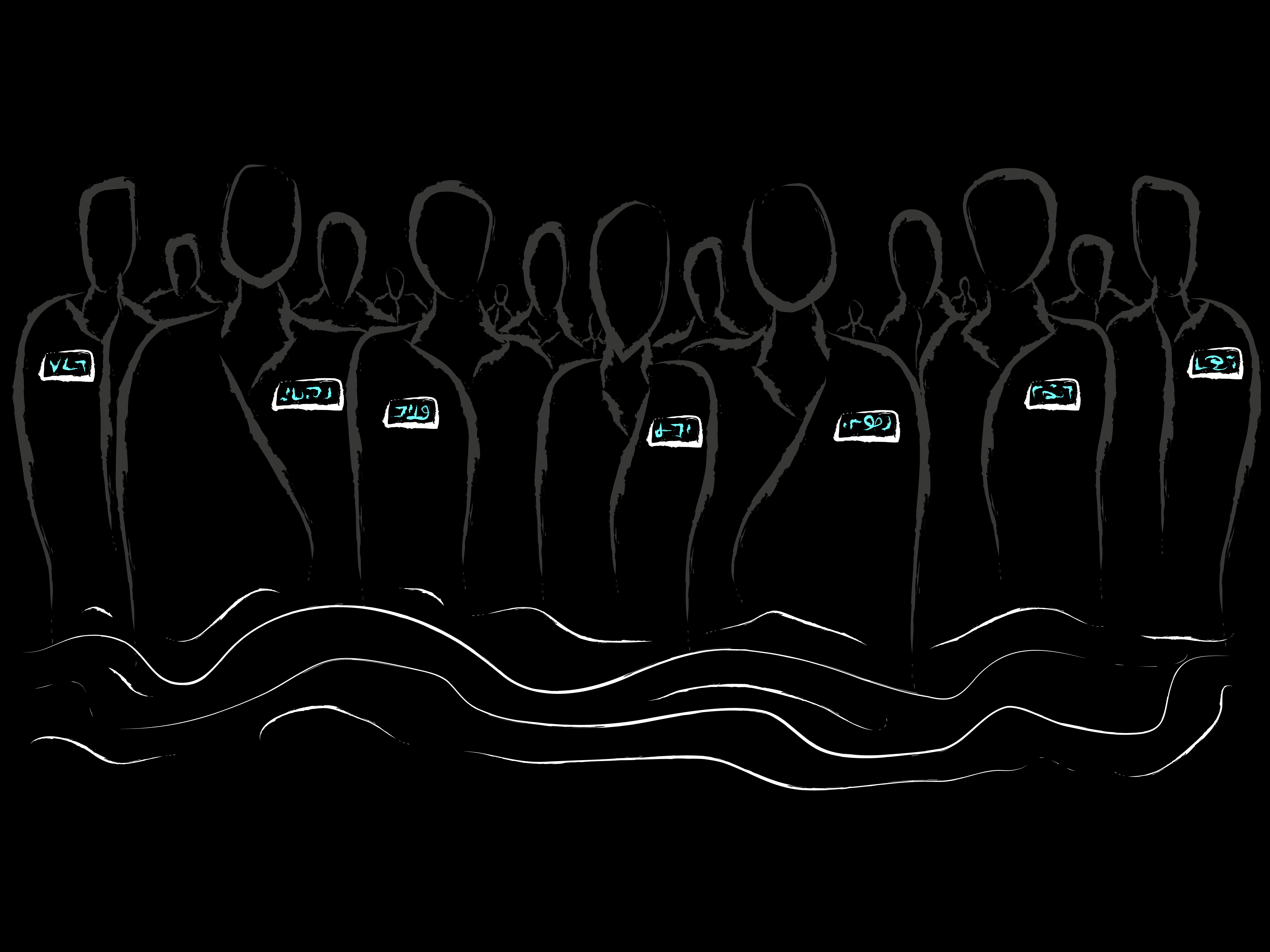
Does Your Name Control Your Destiny?
What is Nominative Determinism?
Names carry some great importance to most people; parents will deliberate on a name for their child months before their birth, and in that discussion, some names are often deemed fitting or unfitting. We make strong associations with the people we meet in our lives, and we connect their personality with their name. If we meet a particularly pleasant person named David, the name comes to carry some positivity for us, and likewise, if someone leaves a particularly bad impression on us, a name can be stained forever. Now, what if names played a bigger role - what if our names could determine our destiny? That’s the question the hypothesis of nominative determinism asks.
Nominative determinism is the idea that people tend to gravitate towards areas of work or interests that fit their names. Two related concepts which predate nominative determinism are aptronym and the Latin idea of nomen est omen (“the name is a sign”). Aptronym just signifies that a name is fitting, either for a person, place or thing. Which highlights the concept to us that we perceive certain names to be fitting or unfitting inherently. For me, a good aptronym is the English word “filth”, because it really sounds like the thing it’s denoting, and it conveys a feeling of both disgust and contempt simply in the way the word is pronounced.
The term nominative determinism was first used in the magazine New Scientist in 1994, after readers wrote in to the “feedback” column and noted that several scientific studies were done by researchers with remarkably fitting surnames, including a book on polar explorations by a Daniel Snowman. However, the idea is much older and was suggested by the psychologist Carl Jung as an example of his theory of synchronicity (events without causal relation that yet seem to be related in some meaningful way). Jung, however, expanded upon the ideas of the German psychologist Wilhelm Stekel’s concept of the “obligation of the name”, where he also spoke of the choice of occupation related to one’s name. Jung further wrote about this when he cited himself and other psychologists as examples, writing:
“Herr Freud (Joy) champions the pleasure principle, Herr Adler (Eagle) the will to power, Herr Jung (Young) the idea of rebirth…”
There have been many theories to explain or even prove nominative determinism to be a real thing; however, empirical evidence is somewhat mixed. Those who have aptronyms tend to give very different accounts of the effect their name has had on their career choices. Some say it’s possible, others reduce it to chance, and others are in between. However, some research in analytics does find that nominative determinism might be a real thing. In 2015, researchers found that British doctors have surnames related to their specialities more often than expected by chance. Reproductive medicine has the largest proportion, with 1 in 52 doctors having names related to their field. I’ll leave that one up to your imagination. The name “Pain” appeared most frequently in general surgery.
There have been similar studies conducted, one that reported that today’s Smiths tend to have the physical capabilities of their ancestors, and people with the name reported above-average aptitude for strength-related activities. A similar aptitude was reported for dexterity-related activities for people named Tailor, but it was not statistically significant.
Empirical evidence seems to point neither completely there nor here, and it’s still debated whether or not nominative determinism is a real phenomenon; some chalk it up to chance and luck, while others believe there may be something else at play. There have been several theories developed surrounding the idea that names may carry more meaning with them than we realise.
Theories Behind Nominative Determinism
1. Implicit Egotism
This hypothesis builds on the concept of the endowment effect found in psychology and behavioural economics. It suggests that people are more likely to acquire a thing they already own. Working with this idea, researchers developed the idea of implicit egotism, which states that humans have an unconscious preference for things they associate with themselves. Because one would associate e.g a surname with oneself and one’s characteristics, then one is, according to this theory, more likely to have positive associations with baking if one’s name is Baker.
Research conducted has, however, found that implicit egotism only seems to apply to cases where people are nearly indifferent between options, and would not apply to major decisions like career choices. A lab experiment conducted also shows that people with low self-esteem tend to not gravitate toward choices associated with the self, but actually away from them.
2. Genetics
When surnames became commonplace, occupational descriptions were also very common, and some of these remain today, such as Taylor, Smith & Fisher. While most surnames weren’t initially hereditary, occupational names were the first ones to become hereditary, as the craft would often be passed down from one generation to another. If you have an occupational surname, there is a decent chance that somewhere your ancestor did just that for a living. Along this line of thinking, then, the theory of genetics emerged.
It argues that the liking or skill of certain professions and trades can be inherited genetically, but also perhaps the attributes best suited for them. Arguing that being naturally physically strong would lead you down a path of lumberjacking or smithing, for example.
3. Environment
Along with the theory of genetics also emerges the idea of environmental influence. Say if you come from a long line of bakers, you would be raised in an environment where baking is cherished, or at least appreciated. Such an environment would foster the know-how and also the attributes necessary to be a good baker, and therefore, you’re likely to inherit both the family name and trade.
Whether family craft is passed down genetically or through the environment in which children are raised remains a point of discussion. A counterpoint to both of these arguments is, of course, the fact that not everyone follows in the steps of their parents. Occupational names have become largely irrelevant today, as somewhere down the line, someone stopped doing what their ancestors did. Smith is one of the most common English surnames, but there aren’t that many blacksmiths around these days.
4. Self-Fulfilling Prophecy
Another theory suggests that one’s self-image and self-expectation are being internally influenced by one’s name, in some ways becoming a self-fulfilling prophecy, where the name given leads a person down a set path. This theory is especially rooted in the old meaning people used to attribute to naming. In 17th century England, naming was very important, and choosing a name for a child was thought to be done carefully. It was believed that children should and would live according to the message contained within their name, and so names could serve as powerful reminders, and names like Faith, Fortitude and Grace started becoming more popular.
People still hold this belief to this day, and a lot of people still believe that names imbue some characteristics into the wearer of that name. This can be very culturally different. E.g in parts of Africa and South America, places that were somewhat distant from the Nazi occupation of Europe, only heard tales of Germany’s strong leader, and so some named their kids after this notorious European tyrant in the belief that it was a powerful name, no different than some might name their kid Julius. There is a Namibian politician who has been re-elected several times, named Adolf Hitler Uunona; he has recently removed Hitler from his name.
While he has stated that his father did name him after the German dictator, he also claims that his dad had no understanding of the ideology or things this German leader stood for. It is, of course, curious that Mr Uunona would take an interest in politics, but let’s hope he can shake some of the history of his name.
5. Social Stimulus
Another theory of nominative determinism is that a name might act like a social stimulus, externally pushing a person towards an occupation. It might be as simple as friends joking that their friend with the surname Ham would make a great deli-owner, or relatives remarking that Arnold is a strong name, and the little boy will grow up to be a strongman. These expectations or encouragements from others are communicated to the individual, who can both feel pressured or motivated to fulfil the obligation of their name.
Psuedonyms & Final Words
It’s clear that names hold an important social and cultural function, and we often consciously or unconsciously attribute a great deal of significance to them. Names hold some level of control over us, and they influence us unconsciously, both through how others see us, but also how we see ourselves, and this is a great deal of power given to the people who name us.
When it comes to nominative determinism, we have to remember that there is a great deal of influence we still have, lots of people change their names, often something they perceive to be something more fitting for themselves, while this is a more modern construct and the luxury of freely choosing occupation wasn’t given to most of humans throughout history, our ability to change our names freely are a modern liberty and privilege.
I chose the pseudonym Zevul, because, in many ways, it’s a more fitting name for the work I do than my real name, and in some ways, that name empowers me to do what I do. It offers some type of distance from me, the real person, and the me who does this. Pseudonyms or renaming yourself can be a way to reinvent yourself or take back some control over who you are and how people perceive you, because a name is always coloured.
It’s coloured by culture, subjective associations, and so much more. We often strive towards apronyms, and think names should be fitting, maybe more so that we adjust our own names to reflect ourselves, than the other way around.
Regardless of whether you believe in nominative determinism or not, it’s a funny thought experiment. Who would you be if you’d been given a different name? How has that shaped you into becoming the person you are today? Did it, on some leve,l determine your destiny?


