
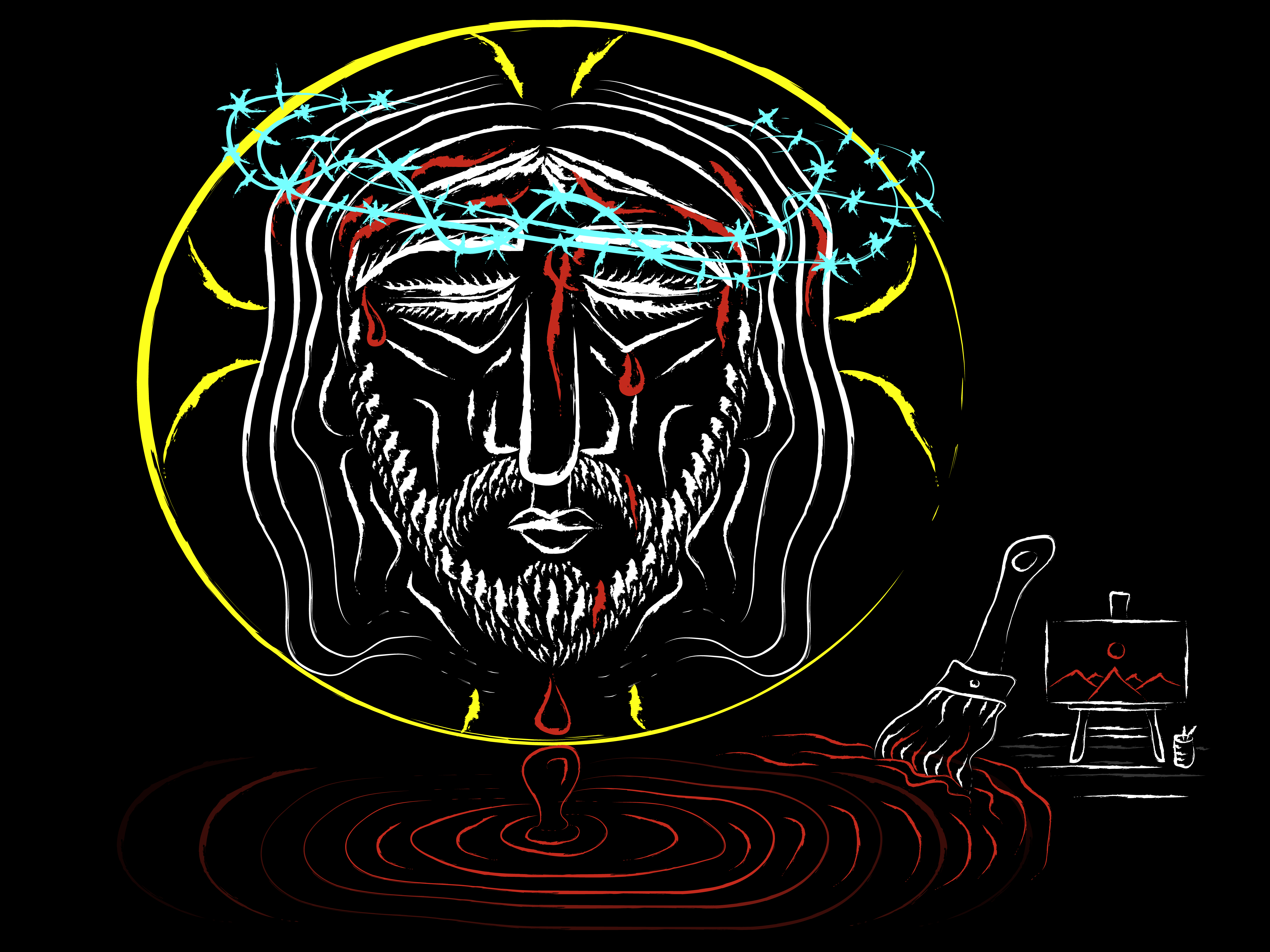
Does Art Require Suffering?
Introduction
One of the most persistent tropes throughout human culture has been that of the suffering artist. It’s been repurposed, recycled, and continues to be used as a way to justify self-sabotage, negligence, and the thorny conditions where some souls find their temporary residence. But is it true? Does art require suffering?
Undoubtedly, any creative knows the power of negative feelings and how productive those dark periods can be, speaking purely artistically. As artists, we’re often quick to express and get out the negative feelings, because expressing them through art means we have less of that energy to carry, and we’re often the opposite when it comes to happiness.
We want to keep our happy feelings tight; we don’t express them through art, because we worry they might leave us. This can make for a very depressing portfolio, and for a body of work which reeks of the irony of blood. As a human, you’re free-willed to do as you wish, but as an artist, you have a responsibility to not only express those difficult emotions but to turn them into something beautiful.
When the same question was posed, David Lynch had the following to say about Vincent Van Gogh in an interview:
“This is part of the myth, I think… Van Gogh did suffer. He suffered a lot. But I think he didn’t suffer while he was painting… I don't think it was pain that made [Vincent Van Gogh] great - I think his painting brought him whatever happiness he had.”
To Lynch, suffering was never part of the creative equation. Even going as far as stating that if you’re truly depressed, you barely get out of bed, let alone create art. Despite personal hardships and mental agony, some artists like Van Gogh are able to turn that suffering and darkness and turn it to something beautiful and bright. One of the noblest parts about art is its alchemical ability to transmute energy and matter.
The Alchemical Art of Transmutation
Allegorically, the medieval art of alchemy is not about turning lead into gold, but rather turning heavy, dark and negative energy/matter/subject into light, bright and positive. Art has that ability, and while we can simply just birth our traumas onto a page, or bleed our intrusive thoughts into composition on a canvas, we can also process those dark subjects and turn them into something beautiful. The world loves dark art, and it loves pain and suffering, and it wants us to stay there, and so it rewards endeavours into the depraved states of mind.
Running on this kind of heavy fuel is bound to poison your mind, body and soul sooner rather than later. I think it’s good and valuable to artistically express these things and contemplate them, but if you don’t transmute them into something positive, then those feelings will linger, and they will become the only thing that makes you able to create. You will wallow in misery and constantly self-sabotage because your work is tied so closely to your self-image, and if you mentally define yourself through this suffering, and do so without love, you will do everything in your path to suffer, because you think that’s what you’re worthy of, or that it somehow makes you better.
This is what happens when suffering is done out of ego, or self-martyrdom, rather than love. You create your own hell, and you’re both prisoner and warden. You become the adversary yourself and the dragon which you self-slay. Breaking free from the trope of the suffering artist doesn’t mean you stop suffering. Pain is an inevitability in this life, but what it does mean is that you take that pain and you turn it into something powerful, into something beautiful.
Suffering can be a powerful catalyst for societal change, and it’s a powerful motivator, but only when you suffer yourself so that others may have it better. This kind of suffering is one of the highest forms of love.
Love & Suffering
In Christian theology, the highest expression of love was Jesus’s selfless act of suffering and sacrifice. It came with doubt, a lot of pain and ultimately with the salvation of the human soul. This kind of suffering is central to the belief and is fundamental in understanding love through a Christian perspective. It was further defined by the early martyrs of the church, and it continues to be a spiritual guide for believers all over the world. This perspective is often difficult for people to understand, even Christians, and is often a point of criticism from nonbelievers.
In today’s world, we often want love to be without suffering; every relationship, romantic or platonic, should be frictionless, and if we suffer any inconvenience, then it can be replaced rather than repaired. Friendships and romantic relationships are trade deals where we have to game to get the most for ourselves, and we should always trust in the hustle culture that if it doesn’t meet our selfish needs, then it’s not worth keeping. This, of course, isn’t true.
Love is filled with suffering, and a test of love is our willingness to suffer for someone else and to suffer with them. We share difficult feelings with people we truly trust, and we help them carry these heavy burdens as well. We comfort and are comforted, and we endure hardships for the people we love. When you’re close with people, you will have arguments, you will find things that annoy you, and you might accidentally say things you regret. Our ability to carry that pain, and then transmute it into forgiveness, compassion and something good is a real expression of love.
That isn’t to say that we can give ourselves up entirely, you can’t and shouldn’t neglect your own peace, health and sanity for someone else. Abusive relationships aren’t tests of martyrdom, and it’s not a token of love to endure that abuse and pain. A better example is the suffering of parents; you give up your sleep, sometimes your food and even your sanity for the well-being of your child, ideally, not in the hopes of getting something back, but out of pure love. Thus, if we love someone or something, we are willing to suffer, and so an artist, too, is willing to suffer out of love. The necessity isn’t suffering; it’s a symptom, but what is necessary is love.
Final Words - Does Art Require Suffering?
The short answer is no, art doesn’t require suffering, but it requires love, and one of the highest forms of love is a willingness to suffer. Suffering can mean many things; we often think about either external or internal ones when it comes to art. Like mental illness, poverty and heartbreak. The idea that art requires suffering to be great is dramatic and often romantic, but it’s not true. An artist can live a miserable and chaotic life, or they can live a stable and healthy one; no one form fits and covers all art. One thing they all do have in common, however, is love. Either as the antidote for that suffering, or as what gives them their strength, or simply as the reason to do art in the first place.
Suffering is inevitable, but not necessary, and it can be dangerous to associate too heavily with it. Especially involving ego or attributing self-worth to it. You can make two things out of suffering: you either heal and transmute it into something beautiful, or you stay stuck in it. Perpetually causing and suffering it yourself. Part of life will always involve suffering; in Buddhism, the way to solve this issue is usually to completely disengage with life, and through not attaching oneself to anything, you absolve yourself of suffering.
Historically and traditionally, especially in the West, we’ve had a different view of suffering. Suffering is associated with growth and with love. “What doesn’t kill you makes you stronger”, and the penultimate form of love in a Christian perspective is the sacrifice of Jesus on the cross. Existential philosophers have viewed it as a natural part of life that should be embraced, and that it makes us better people, both morally and intellectually.
I had a dream last night where I met a Buddhist monk, and I remember vaguely talking about suffering with them, and the one line I said, which I remember clearly, was:
To the western man, suffering is not only philosophically desirable, but spiritually necessary.
If I could go back to that dream, I would tell the monk that it’s only possible because of love. Just as art is only possible because of love. You don’t need to suffer to be a good artist, but being human, you will suffer, and I hope you find the strength to get past that, and I hope you turn it into something good. Suffering shouldn’t define you, but it should be a powerful catalyst within you.
A final example of how suffering makes you a better person is working in retail. Because until you’ve worked and suffered in retail, you can’t relate to retail workers. That suffering broadens perspective and should, in turn, make you more empathetic and kind.
It’s all going to depend on how you define suffering. Getting better at something requires time and effort, and being an artist requires some sacrifices, as all things do, but art has a very tangible ability to turn that suffering, with love, into something extraordinary, something very powerful. Learning that may take some time, and remember to be real with yourself, but also compassionate. Suffer for love, but don’t suffer needlessly and not at the hands of evil.


